Feeds:
Posts
Comments

Archive for the ‘July-Dec 2014’ Category

How to Prevent Yourself from a Fall, Trip, or Slip

Increased Risk of Fall Accident Begins at Age 40
By: Junji Takano

One of the main health concerns of elderly people is falling, which is often related to poor balance. In fact, many studies show that people begin to have balance problems starting at the age of 40 years.

The older you get, the weaker your physical body and sensory abilities will be, which are all factors in having poor balance.

Falling Accidents

In Japan, more than 7,000 people a year die from falling accidents, which already exceeds the number of traffic accidents.

In this article, we’ll examine in more details the cause of falling and why you lose balance as you age.

## Test Your Balance by Standing on One Leg
You can determine how good your balance is by measuring the length of time that you can stand on one leg.

How to Stand on One Leg

get-attachment.aspx
The following table shows the average balance time by age group in a study conducted at a Japanese health institute.

Average time with eyes open
20-39 years old: 110 seconds
40-49: 64 seconds
50-59: 36 seconds
60-69: 25 seconds

Average time with eyes closed
20-39 years old: 12 seconds
40-49: 7 seconds
50-59: 5 seconds
60-69: less than 3 seconds

If your balance time is below average, then you’ll have higher risk of falls, or slipping and tripping accidents.

In the above study, women tend to lose their balance more than men but only by a small margin (1-2%).

From this study, it is also evident that there’s a sudden significant decrease in the ability to maintain balance among middle-aged people (40 years and above).

Please take note that the numbers stated above are only average. There are people who were able to maintain balance much longer, and there are also those who were only able to maintain their balance at much shorter time regardless of age and gender. The reason why they vary is explained further below.

## The Soles of Your Feet Have Sensors
The skins all throughout your body have significant amount of tiny pressure sensors or mechanoreceptors. Some areas have few pressure sensors, while other areas have thousands, like on the soles of your feet.

Pressure Sensors or Mechanoreceptors on the soles of the feet

get-attachment.aspx-2
The pressure sensors on the foot soles provide information to your brain to help balance your body.

As you get older, the sensors will get weaker and your foot sole lose sensitivity.

But there are also other factors that can lead to weaker pressure sensors.

## Poor Blood Circulation Can Disrupt the Pressure Sensors
In our study, people are almost twice as likely to be in a fall accident caused by poor blood circulation.

This can be simulated by soaking your feet into ice cold water for about 3 minutes.
Because of the cold temperature, the pressure sensors on the foot sole begin to lose sensitivity.

# Pay Attention to Your Forward-Moving Foot
If your forward-moving foot hit something, your body will be off-balance causing you to fall or trip.
Well, it’s a matter of common sense to always have your eyes on path and watch where you are going.

Remember the old adages – “Prevention is better than cure”,
“An ounce of prevention is worth a pound of cure”,
“Look before you leap” etc.

But that’s not the only problem.

Here are the other two major reasons why you stumble while walking.

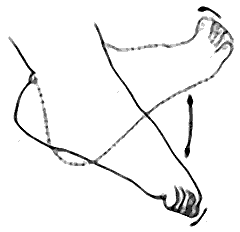
1. Your forward-moving foot is pointed down.
If your foot is pointed down while making a step, then you are more prone to falling.
To avoid this, your forefoot or toes should be flexed upwards as shown on the image below.

Flex Your Toes Upward while Walking
get-attachment.aspx

2. You walk like a pendulum.
The height of your step can greatly increase your risk of falling.

To prevent this, your forward-moving foot must be higher off the ground (at least 5 cm) while the knee is raised high as shown on the image below.

get-attachment.aspx-3

Proper Height of Foot When Making a Step

Actually, all the mechanoreceptors located throughout your body as well as the soles of your feet are sending information to the brain that include muscle contractions and joint angles. 

When this information is not transmitted well to your brain, which happens as you get older, then the movement will get weak or ineffective making it hard for you to maintain your foot higher off the ground.

## How to Prevent Yourself from a Fall, Trip, or Slip

1. Keep Your House Clean
There are a lot of things in your house that can contribute to clutters that can cause you to trip or fall.
Always make sure to put away or store properly all personal belongings and other unnecessary things even if it is only a newspaper, remote control, and laundries scattered on the floor or carpet.

2. Stretch Your Feet and Ankles

Feet Exercise

Toe Exercise

You might think that your feet do not need exercise or stretching compared to other parts of your body, but in reality, feet stretching exercise can really help your feet maintain balance.

3. Keep Your House Warm and Ensure Adequate Lighting
Cold muscles and pressure sensors work less well and are less responsive to signals.

A decreased temperature will also cause your muscles to have less strength and less flexible, which can lead to accidents.

Always try to keep your house warm or wear proper clothes and footwear, especially during winter or cold weather.

Since most falls occur indoors, make sure your house has adequate lighting.

————————————————————
About the author:
Junji Takano is a Japanese health researcher involved in investigating the cause of many dreadful diseases. In 1968, he invented PYRO-ENERGEN, the first electrostatic therapy device for electromedicine that effectively eradicates viral diseases, cancer, and diabetes

Read Full Post »

Turmeric is Good

10645184_10152352572692918_1515664410615078706_n

Read Full Post »

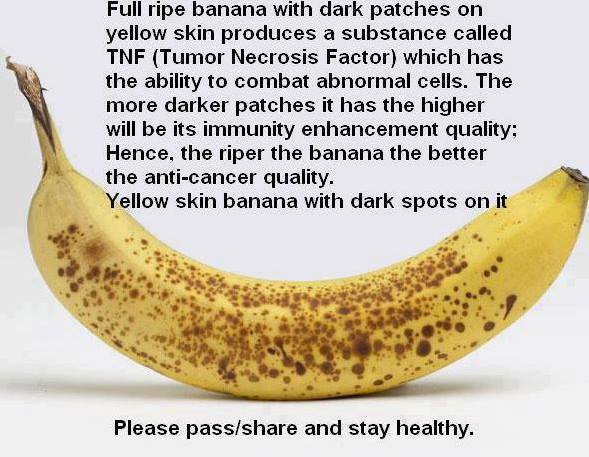
Go Bananas!

10672347_10204769669499952_5748109862518782608_n

Read Full Post »

Researchers challenge double mastectomy
Survival rates akin to other procedures
September 2, 2014 

By Mackenzie Carpenter / Pittsburgh Post-Gazette
More and more women are choosing to aggressively treat a cancer diagnosis in one breast with a double mastectomy, but new research says that won’t make a difference in long-term survival rates.

A large new study by the Stanford University School of Medicine and the Cancer Prevention Institute of California found that the rate of double mastectomies jumped from 2.0 percent in 1998 to 12.3 percent in 2013. But survival rates were similar to those who had the more targeted procedure of breast-conserving surgery — when just the malignant lump is removed, followed by radiation. The findings were published Tuesday in the Journal of the American Medical Association.

“When faced with a new breast cancer diagnosis, many patients assume that they will achieve a survival advantage by pursuing the most aggressive surgical strategy,” wrote Lisa Newman, director of the Breast Care Center at the University of Michigan, in an editorial accompanying the JAMA article.

That assumption is misguided, based on results of the study, which analyzed survival for nearly 200,000 patients in the California Cancer Registry from 1998 to 2011. In that group — women with cancer in one breast — 55 percent had just the lump removed followed by radiation treatment, 39 percent had one breast removed and 6 percent had both breasts removed. The 10-year survival rate was 83.2 percent, 81.2 percent, and 79.9 percent, respectively. The difference among the three was not statistically significant.

The analysis doesn’t break down different types of breast cancers, but it is the first to directly compare survival rates following the three most common breast cancer surgeries.

These findings might prompt insurers to think twice about covering double mastectomies after cancer is found in one breast, and it’s important to consider whether such surgery is justified “in an era of escalating medical costs and uncertainty regarding how to contain these costs while continuing to promote a healthy population,” Dr. Newman wrote.

A mastectomy is a major procedure that can require significant recovery time and may entail breast reconstruction, the lead author, Allison Kurian, an assistant professor of medicine and of health research and policy at Stanford, said in a statement. “Whereas a lumpectomy is much less invasive with a shorter recovery period,” she said.

Nonetheless, younger women in particular are opting for a more drastic approach. In 2011 alone, 33 percent of women with cancer in one breast under age 40 opted to remove both breasts, compared to 3.6 percent in 1998. Most of those choosing double mastectomies are white, have private insurance and receive treatment at a National Cancer Institute-designated cancer center, the researchers found.

Local breast cancer experts weren’t surprised by the findings.

“This confirms what medical professionals have always suspected,” said Kathleen Erb, a breast cancer surgeon at Allegheny General Hospital. “It tells us what we felt was true: There is no survival benefit to removing an unaffected breast, except in special cases.”

Those special cases would include women who test positive for the so-called BRCA1 or BRCA2 genes or other mutations. A genetic predisposition may mean that a double mastectomy can lower risk significantly, even if cancer hasn’t been diagnosed yet, noted Kandace McGuire, a surgeon who is director of the pre-menopausal breast cancer program at Magee-Womens Hospital of UPMC.

In May 2013, Hollywood star Angelina Jolie made headlines when she decided to have a preventive double mastectomy after testing positive for the BRCA gene. Other celebrities have had the surgery as well.

”There’s this attitude, ‘I never want this to happen again.’ I can’t tell you how many times I’ve heard women say that to me” when requesting a double mastectomy, said Dr. McGuire, even though the likelihood of the initial cancer recurring in either breast is quite small.

”Most women diagnosed with breast cancer live a long, long life, and removing the opposite breast doesn’t improve that already good outcome.”


Read Full Post »

Advice From a 101 Old Doctor! (He is a healthy 103 now)

Dr. Shigeaki Hinohara, Japan, turns 101 on 4th October 2012

shigeaki-hinohara

As a 101 year old Doctor, he was interviewed, and gave his advice for a long and healthy life.

Shigeaki Hinohara is one of the world’s longest-serving physicians and educators. Hinohara’s magic touch is legendary: Since 1941 he has been healing patients at St. Luke’s International Hospital in Tokyo and teaching at St. Luke’s College of Nursing.

He has published around 15 books since his 75th birthday, including one “Living Long, Living Good” that has sold more than 1.2 million copies. As the founder of the New Elderly Movement, Hinohara encourages others to live a long and happy life, a quest in which no role model is better than the doctor himself.

Doctor Shigeaki Hinohara’s main points for a long and happy life:

* Energy comes from feeling good, not from eating well or sleeping a lot. We all remember how as children, when we were having fun, we often forgot to eat or sleep. I believe that we can keep that attitude as adults, too. It’s best not to tire the body with too many rules such as lunchtime and bedtime.

* All people who live long regardless of nationality, race or gender share one thing in common: None are overweight. For breakfast I drink coffee, a glass of milk and some orange juice with a tablespoon of olive oil in it. Olive oil is great for the arteries and keeps my skin healthy. Lunch is milk and a few cookies, or nothing when I am too busy to eat. I never get hungry because I focus on my work. Dinner is veggies, a bit of fish and rice, and, twice a week, 100 grams of lean meat.

* Always plan ahead. My schedule book is already full until 2014, with lectures and my usual hospital work. In 2016 I’ll have some fun, though: I plan to attend the Tokyo Olympics!

* There is no need to ever retire, but if one must, it should be a lot later than 65. The current retirement age was set at 65 half a century ago, when the average life-expectancy in Japan was 68 years and only 125 Japanese were over 100 years old. Today, Japanese women live to be around 86 and men 80, and we have 36,000 centenarians in our country. In 20 years we will have about 50,000 people over the age of 100…

* Share what you know. I give 150 lectures a year, some for 100 elementary-school children, others for 4,500 business people. I usually speak for 60 to 90 minutes, standing, to stay strong.

* When a doctor recommends you take a test or have some surgery, ask whether the doctor would suggest that his or her spouse or children go through such a procedure. Contrary to popular belief, doctors can’t cure everyone. So why cause unnecessary pain with surgery I think music and animal therapy can help more than most doctors imagine.

* To stay healthy, always take the stairs and carry your own stuff. I take two stairs at a time, to get my muscles moving.

* My inspiration is Robert Browning’s poem “Abt Vogler.” My father used to read it to me. It encourages us to make big art, not small scribbles. It says to try to draw a circle so huge that there is no way we can finish it while we are alive. All we see is an arch; the rest is beyond our vision but it is there in the distance.

* Pain is mysterious, and having fun is the best way to forget it. If a child has a toothache, and you start playing a game together, he or she immediately forgets the pain. Hospitals must cater to the basic need of patients: We all want to have fun. At St. Luke’s we have music and animal therapies, and art classes.

* Don’t be crazy about amassing material things. Remember: You don’t know when your number is up, and you can’t take it with you to the next place.

* Hospitals must be designed and prepared for major disasters, and they must accept every patient who appears at their doors. We designed St. Luke’s so we can operate anywhere: in the basement, in the corridors, in the chapel. Most people thought I was crazy to prepare for a catastrophe, but on March 20, 1995, I was unfortunately proven right when members of the Aum Shinrikyu religious cult launched a terrorist attack in the Tokyo subway. We accepted 740 victims and in two hours figured out that it was sarin gas that had hit them. Sadly we lost one person, but we saved 739 lives.

* Science alone can’t cure or help people. Science lumps us all together, but illness is individual. Each person is unique, and diseases are connected to their hearts. To know the illness and help people, we need liberal and visual arts, not just medical ones.

* Life is filled with incidents. On March 31, 1970, when I was 59 years old, I boarded the Yodogo, a flight from Tokyo to Fukuoka. It was a beautiful sunny morning, and as Mount Fuji came into sight, the plane was hijacked by the Japanese Communist League-Red Army Faction. I spent the next four days handcuffed to my seat in 40-degree heat. As a doctor, I looked at it all as an experiment and was amazed at how the body slowed down in a crisis.

* Find a role model and aim to achieve even more than they could ever do. My father went to the United States in 1900 to study at Duke University in North Carolina. He was a pioneer and one of my heroes. Later I found a few more life guides, and when I am stuck, I ask myself how they would deal with the problem.

* It’s wonderful to live long. Until one is 60 years old, it is easy to work for one’s family and to achieve one’s goals. But in our later years, we should strive to contribute to society. Since the age of 65, I have worked as a volunteer. I still put in 18 hours seven days a week and love every minute of it.

Read Full Post »

post199-300x300

For years we believed that we need to eat dairy products to provide calcium for strong and healthy bones, but the truth actually lies elsewhere: fruits and vegetables that have higher calcium absorption. This article will give you information about other options for better sources of calcium and how much to consume of them.

If you have a look through your bone tissue, you will find a living and dynamic tissue that is very sensitive to our way of life. Bone is constantly in the process of loss and construction: until the age of 30 or so the pace of construction exceeds bone loss and we reach to the peak of bone mass. Then there is a balance between the processes of bone loss and bone building, but at about the age of 40 there is decrease in the rate of bone construction which starts the process of bone loss, which increases at around the age of 50 in women and age 70 in men.

Advanced bone loss will eventually lead to osteoporosis, a condition in which the bones become weak and brittle. This condition increases the risk of fractures, especially the hips, wrists and vertebrae. Osteoporosis can be described as the disease of old age but we build our bones from a young age. Therefore, you need to make sure to start and prevent it from a younger age. See more information in my article discover the 4 steps to prevent osteoporosis.

But what is the ideal nutrition for our bones? are there better sources of calcium than dairy products? In a recent article published in the journal JAMA Pediatrics, leading scientists from Harvard University claim that milk provides significant amounts of protein and other essential nutrients, and may provide health benefits for children and adults with poor nutritional quality. But for people who enjoy a nutritious diet – which includes greens, legumes, nuts, seeds and enough protein – researchers claim that the nutritional benefits of milk consumption probably don’t outweigh the negative effects.

How much calcium do you need?

There is no doubt about the importance of calcium for the bone, but there is a dispute about the amount required, as reflected in the recommendations for calcium intake over 50 different countries: in New Zealand and Australia it’s 1,300 mg, in the United States 1200 mg, in Scandinavia 800 mg and in the UK 700 mg – nearly 50% less than in the United States.

Harvard researchers claim that the recommended amount in the United States is primarily based on three studies that lasted three weeks or less, and probably this recommendation is higher that what the body really needs.

Is it possible to get enough calcium without dairy products?

The recommended calcium intake in the U.S. is high, and some argue that without dairy products this daily intake cannot be practically achieved. People aged 50 and older need 1,200 mg of calcium as stated, the age group of 19-50 needs 1,000 mg, the age group of 9-18 needs 1,300 mg, and 800 mg is required for ages 4-8.

It is important to know that three dairy products provide only about 600 mg of calcium on average, about half the recommended intake, when it is assumed that balanced diet will provide the remaining calcium. However it is possible to provide all the necessary calcium intake through plant food sources only, although it may not be easy for many of us:

Here are examples of plant food sources containing together about 1,000 mg of calcium:

1/2 cup cabbage -20 mg calcium
1 orange – 60 mg
1/2 cup parsley – 41 mg
2 dried figs – 60 mg
1/2 cup arugula – 48 mg
10 almond – 30 mg
1 cup of cooked green beans – 57 mg
1 cup cooked broccoli – 80 mg
1 cup mashed sweet potatoes – 88 mg
1 fennel – 99 mg
1 cup white beans – 160 mg
2 tablespoons hummus spread – 37 mg
1 tablespoon raw tahini paste – 125 mg
100 g tofu (not calcium fortified) – 110 mg

Here are examples of calcium-fortified plant foods that supply together 1,450-1,980 mg calcium:

100 g tofu calcium-fortified – 440-670 mg
1 cup fortified cereals – 130-220 mg
100 g ​​seitan – 590-800 mg

This list is a partial of course, and there are other good plant sources of calcium, such as: okra, Brussels sprouts, pumpkin, butternut squash, butter beans, leeks, artichokes, celery, coriander, Chinese cabbage, kale, tangerines, carob products, hazelnuts, Brazil nuts, flaxseed, fenugreek and poppy seeds.

Does calcium from plant food sources is absorbed well in our body?

Except spinach and Swiss chard, which has absorption rate of only 5%, calcium is absorbed well from plant food sources. The absorption rate of legumes, nuts and seeds is 21% -27%, and the highest calcium absorption rate – 50% to 60% – is from green vegetables like kale, arugula and broccoli, roughly twice higher in comparison to dairy products whose absorption rate is about 32%. For example, 100 ml of milk (half a cup) contains 100 mg of calcium, and 100 grams of broccoli (about two-thirds cup) contains 50 mg, but the amount absorbed is similar: about 32 mg milk and 30 mg broccoli.

Is calcium the whole story?

Most of us think of the skeleton as a calcium casting, but bone is composed of 40% protein, and calcium in the end is only half of its contents. Also, a proper functioning required various nutrients in addition, for example – calcium and vitamin D which helps to absorb calcium.

Here are other essential components of the bone:

Vitamin K – participates in bone building and reduces urinary calcium excretion. Can be found in green vegetables: various leaves, broccoli, Brussels sprouts and okra.

Vitamin C – essential for creating the main protein in the bone (collagen) and is also an antioxidant. Can be found in pepper, parsley, cabbage, tomato, citrus and mango. Berries are especially high in vitamin C. You can find easy and nutritious berry recipes in my my e-book The Healing Berry Guide. This e-book will teach you how to transform your health with berries and their incredible health benefits

Antioxidants: Lycopene and Beta Carotene – these are antioxidants that fight many diseases, including osteoporosis. Can be found in red fruits and vegetables such as tomatoes and watermelon, orange fruits and vegetables such as carrots, pumpkin, mango, and Green leaves

Potassium – helps in creating an alkaline environment in the blood, known as protecting the bone. Can be found in greens, sweet potatoes, broccoli, melon, fig, orange, nuts, seeds and legumes.

Magnesium – helps in creating alkaline environment in the blood, is essential for creating vitamin D and required for the metabolism of calcium. Magnesium can be found in green leaves, seeds, almonds and beans.

All the above components received recognition for their contribution for bone health and are reflected in the latest recommendations of leading health organizations such as the National Osteoporosis Foundation (NOF).

Also the dietary supplements market is not left behind, and today you can find specialized calcium supplements containing additional minerals and vitamins such as magnesium and vitamin K. These supplements aim to mimic the diversity and combination of the existing components found naturally in plant food sources.

Potassium and magnesium are also found in dairy products, but in a smaller amount than in plant sources. Vitamin C, vitamin K, beta-carotene and lycopene are found only in plants.

What you should not consume?

Sodium (salt) is very harmful to the bones because it increases calcium loss in the urine. The main source of sodium in the modern diet is processed foods, so for this reason it is recommended to prefer home-cooked food. When buying packaged food, it is recommended to check the sodium content, compare brands and choose the best product that is relatively low in sodium. Food containing less than 100 mg sodium per 100 grams is considered low sodium.

Cabbage, for example, contains a moderate amount of calcium that is absorbed at maximum rate. It also contains vitamin C, vitamin K, beta-carotene, potassium and magnesium, but on the other hand does not contain sodium. However, hard cheeses are among the richest in calcium but have lesser absorption rate of cabbage. Also they don’t contain the beneficial components mentioned above, and they are rich in sodium.

Harvard researchers also refer to the broad health effects of various calcium sources, and point out that while the hypothesis that dairy products protect against colon cancer, it has been found that high consumption of dairy products can probably increase prostate cancer risk and maybe ovarian cancer risk as well.

However, according to dietary guidelines issued in 2012 by The American Cancer Society (ACS), a diet rich in vegetables (especially cruciferous vegetables, such as broccoli and cabbage) and legumes is associated with a reduced risk of prostate cancer. Moreover, the high consumption of fruits and vegetables is associated with a significantly decreased risk of colon cancer.

To summarize, similar to other diseases common in the Western world, the risk of osteoporosis decrease through appropriate diet rich in quality plant food sources. It is recommended to get the calcium we need from plant food sources such as vegetables, legumes, nuts and seeds, and consume dairy products in moderation. The plant food sources provide, in addition to calcium, a unique package of nutrients that work together to maintain bone and general health.

Read Full Post »

Can the use of antiperspirants and deodorants increase the risk for breast cancer?

Data from a study published online January 12 in the Journal of Applied Toxicology could relieve some of the fears about using underarm products, but could also raise questions and concerns.

The issue centers on exposure to alkyl esters of p-hydroxybenzoic acid (parabens), which are widely used as antimicrobial preservatives in pharmaceuticals, foods, and cosmetics. About 10 years ago, note the researchers, studies began to reveal that parabens had estrogenic properties, and estrogen plays a central role in the development, growth, and progression of breast cancer.

In this new study, researchers in the United Kingdom examined 160 breast-tissue samples obtained from 40 patients who had undergone a mastectomy for primary breast cancer. They found that 99% of samples had traces of at least 1 paraben, and that 60% had traces of 5 different parabens.

Importantly, 7 of the women reported never having used underarm products. This suggests that the parabens originated from another source, note the authors.

The source of the parabens measured in this and in previous studies cannot be identified; it is also not clear if the paraben traces come from long-term accumulation, current exposure, or a combination of both.

Parabens are only one part of a much bigger picture.
“I do think that the parabens are only one part of a much bigger picture,” said lead author Philippa D. Darbre, PhD, a reader in oncology at the University of Reading, United Kingdom.

“That is not to say that they do not contribute, but the issue is bigger,” she told Medscape Medical News. “Parabens are only one component…of personal care products. What is needed now is…a map of what chemicals there are in a human breast in the modern world and how they distribute across the breast, especially in relation to the site of the tumor.”

Adding to the Evidence

In their study, Dr. Darbre and colleagues found a disproportionate incidence of breast cancer in the upper outer quadrant of the breast. In all 40 women, levels of n-propylparaben were higher in the axilla region than in the mid or medial regions (Wilcoxon matched pairs test, P = .004 and P = .021, respectively).

This finding is not unusual; a number of studies over the past several decades have reported that a disproportionately high number of breast tumors in women originate in the upper outer quadrant of the breast, “for which a definitive explanation remains lacking,” the authors write. This disproportionality has been increasing in the United Kingdom, and now exceeds 50% of breast cancers.

“The detection of intact esters is more suggestive of a dermal route of exposure,” said Philip W. Harvey PhD, a registered toxicologist at Covance Laboratories Ltd, North Yorkshire, United Kingdom, who was not involved in the study. “Oral exposure results in the rapid conversion of the esters to the common metabolite p-hydroxybenzoic acid in both gut and liver. The skin has a much lower esterase capacity, which may explain the fact that 5 different intact paraben esters were found.”


Read Full Post »

While the world of conventional medicine lines up to profit from the Ebola panic, there is no mention anywhere in the mainstream media of the criminal corporation behind the Ebola vaccine.

GlaxoSmithKline, now being celebrated by the pro-pharma press, is the same company that also has a proven criminal record of bribing physicians and knowingly distributing misleading information about the safety of their drug products.

Just two years ago, GSK plead guilty to felony crimes in the United States and was forced to pay an historical $3 billion fine for committing those crimes. After paying the fine, GSK was then exempted from normal rules regarding criminal enterprise, allowing it to continue conducting business with the federal government.

“Global health care giant GlaxoSmithKline LLC (GSK) agreed to plead guilty and to pay $3 billion to resolve its criminal and civil liability arising from the company’s unlawful promotion of certain prescription drugs, its failure to report certain safety data, and its civil liability for alleged false price reporting practices, the Justice Department announced today,” says a U.S. Department of Justice press release.

It goes on to explain, “GSK agreed to plead guilty to a three-count criminal information, including two counts of introducing misbranded drugs, Paxil and Wellbutrin, into interstate commerce and one count of failing to report safety data about the drug Avandia to the Food and Drug Administration (FDA).”

As was reported in 2012:

A roughly nine-year federal investigation has exposed GSK’s rampant abuse of the law by illegally marketing drugs, forging drug safety data, bribing doctors to promote dangerous and expensive drugs, ripping off Medicare and Medicaid, and lying about the effectiveness and safety of drugs. And all this deception has generated tens of billions of dollars in profits for GSK over the years, while thousands of patients who used the drug products involved have suffered horrific side effects and even death.

Criminal drug company to spearhead Ebola vaccine with U.S. scientists

Now this same company that admitted committing multiple felony crimes is going to lead the development of the Ebola vaccine.

As CNBC reports: (1)

“A clinical trial of an experimental vaccine against the deadly Ebola virus is set to start shortly, according to British drugmaker GlaxoSmithKline, which is co-developing the product with U.S. scientists.”

Vaccine to be “rushed through” with very little safety testing

We also know that the vaccine will not be tested for anything other than short-term side effects. This is all part of the “rush to market” for Big Pharma to profit from Ebola as quickly as possible.

As CNBC says:

A company spokeswoman said on Sunday that the trial should get underway “later this year”, while GSK’s partner the U.S. National Institute of Allergy and Infectious Diseases (NIAID) said in a statement on its website it would start “as early as fall 2014”, implying a potential September launch of testing.

A headline in the Daily Mail declares “World Health Organisation says vaccine could be ‘rushed through’ for 2015.” (2)

That same story goes on to report, “the WHO said a potential vaccine for the Ebola virus is being tested on humans and could be ready for widespread use by early 2015.”

Doing the math here, if the Ebola vaccine clinical trials start in September of 2014 and the vaccine is manufactured and distributed to the public by “early 2015,” this leaves virtually zero time for observing vaccine side effects.

Manufacturing the vaccine in large quantities, after all, takes many months. If this vaccine is to be available to the public in early 2015, they will have to start manufacturing it as early as October 2014, roughly just one month after the vaccine trials begin.

Zero liability; total immunity for faulty products

Keep in mind that in the United States, vaccine manufacturers have zero liability for the damage and death caused by their products. Due to a literal Act of Congress, all vaccine manufacturers are able to abandon all safety testing and knowingly sell faulty, deadly products with zero risk of liability.

This was all set up by design to make sure vaccine manufacturers could enjoy record profits while having zero liability for producing faulty products that harm children and adults. This is the reason why mercury is still used in flu vaccines which are injected into children — a fact which I have scientifically proven in the Natural News Forensic Food Labs using ICP-MS instrumentation.

This total immunity means there is no incentive for adequate safety testing of an Ebola vaccine. The company has the same liability (zero) whether they test the vaccine or not. Their goal is to SELL the vaccine, not to make sure it’s safe and effective. Time spent on conducting rigorous clinical trials with long-term observations simply isn’t part of the “Sell! Sell! Sell!” business plan of today’s vaccine manufacturers. Their current business slogan? “Every pandemic is an opportunity for profit.” And with blanket immunity from all product liability, who needs safety testing?

Vaccine manufacturers routinely rely on scientific fraud

Here’s additional information you need to know about vaccine fraud, originally published in this article on Natural News:

According to two Merck scientists who filed a False Claims Act complaint in 2010 — a complaint which has just now been unsealed — vaccine manufacturer Merck knowingly falsified its mumps vaccine test data, spiked blood samples with animal antibodies, sold a vaccine that actually promoted mumps and measles outbreaks, and ripped off governments and consumers who bought the vaccine thinking it was “95% effective.”

See that False Claims Act document at:
http://www.naturalnews.com/gallery/documents…

According to Stephen Krahling and Joan Wlochowski, both former Merck virologists, the Merck company engaged in all the following behavior:

• Merck knowingly falsified its mumps vaccine test results to fabricate a “95% efficacy rate.”

• In order to do this, Merck spiked the blood test with animal antibodies in order to artificially inflate the appearance of immune system antibodies. As reported in CourthouseNews.com:

Merck also added animal antibodies to blood samples to achieve more favorable test results, though it knew that the human immune system would never produce such antibodies, and that the antibodies created a laboratory testing scenario that “did not in any way correspond to, correlate with, or represent real life … virus neutralization in vaccinated people,” according to the complaint.

• Merck then used the falsified trial results to swindle the U.S. government out of “hundreds of millions of dollars for a vaccine that does not provide adequate immunization.”

• Merck’s vaccine fraud has actually contributed to the continuation of mumps across America, causing more children to become infected with mumps.

• Merck used its false claims of “95 percent effectiveness” to monopolize the vaccine market and eliminate possible competitors.

• The Merck vaccine fraud has been going on since the late 1990’s, say the Merck virologists.

• Testing of Merck’s vaccine was never done against “real-world” mumps viruses in the wild. Instead, test results were simply falsified to achieve the desired outcome.

• This entire fraud took place “with the knowledge, authority and approval of Merck’s senior management.”

• Merck scientists “witnessed firsthand the improper testing and data falsification in which Merck engaged to artificially inflate the vaccine’s efficacy findings,” according to court documents.

Read Full Post »

natural-remedies-for-receding-gums-600x450

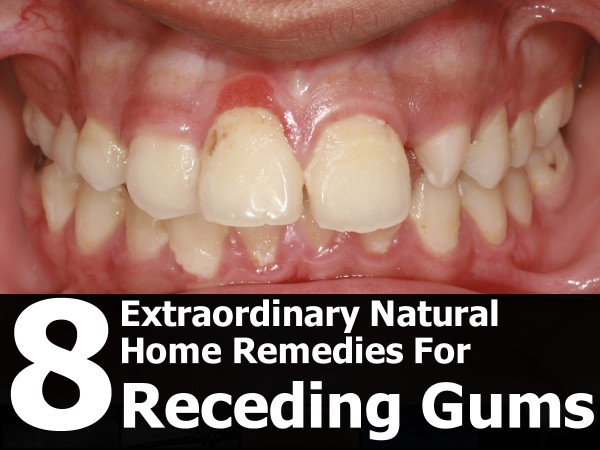
Receding gums are characterized by the gum tissue margin surrounding the teeth wearing away. This results in more of the tooth surface being exposed, and in some cases, the root becomes exposed which can cause pain and intense sensitivity.

Gum recession is often an initial sign of gum disease, a condition that can get very serious, cause tooth loss and affect overall health. This is a very common problem and many people are unaware that their gums are receding until they have receded to a noticeable level. Gum recession can be treated so that further damage is prevented.

There are natural home remedies for receding gums that can help to stop the problem and promote better overall gum health.

Green Tea
Green tea is packed with antioxidants and it helps in the prevention of a multitude of diseases. The damage caused by receding gums may be decreased with the regular consumption of green tea.

It works by reducing gum inflammation and it aids in the destruction of bacteria in the oral cavity which works to prevent periodontal disease. Just one cup each morning can provide gum-healthy benefits.

Sesame Oil
Sesame oil helps to reduce plaque buildup and it removes toxic substances from the oral cavity. Plaque buildup and toxins can contribute to receding gums. You need a quarter of a cup of this oil and then use it as a mouthwash, swishing it around in your mouth for about 30 seconds before brushing your teeth. You can still use your regular mouthwash and pre-brush rinse too.

To improve plaque and toxin removal and to encourage better absorption, the oil can be slightly warmed, but never hot. Warmed sesame oil also helps to prevent dental decay and gum recession because it provides a protective coating on the gums.

Coconut Oil
Coconut oil is antimicrobial in nature making it an excellent choice to reduce gum recession and help to treat the various things that can cause it, such as bacteria-related gum diseases. In addition to helping to reduce pre-existing bacteria, this oil and can help to prevent the overgrowth of new bacteria and germs. It works to prevent tooth decay and further gum issues by ridding the teeth and gums of germs and food particles.

This oil can be used on a daily basis for general oral hygiene and to prevent receding gums. Make sure to use a virgin oil and then use it like a regular mouthwash by swishing it around in the mouth for 30 seconds after brushing. If you use regular mouthwash too, use this afterward so that the protective benefits are not washed away.

Aloe Vera
Aloe vera is very healing and its antibacterial and anti-inflammatory benefits extend to helping to protect the gums and teeth from receding gums and decay. Infections and damaged gums can also be healed with aloe. Take a fresh piece of aloe and use the gel within it to brush the teeth. This can be done after regular brushing, flossing and use of mouthwash.

Lemon Oil
Lemon oil works well as an antibacterial agent and it also possesses mild antiseptic properties. Lemon is powerful in preventing tooth decay and gum recession due to its ability to destroy bacteria in the mouth. However, unlike most other remedies for receding gums, you cannot use this on a daily basis because it is acidic and can wear away the enamel if used too frequently.

It is best to use this about once a week and make a mixture of an ounce of extra virgin olive oil and the juice from about one-fourth of a fresh lemon. This makes enough to do two swishes in a day, once in the morning and once in the afternoon, preferably after lunch. Just swish this around the mouth like you would a regular mouthwash to get the full benefits.

Eucalyptus
Eucalyptus is an essential oil that prevents gum disease and tooth decay, and it kills germs to prevent the diseases that cause gum recession. This oil also works to reduce gum swelling due to its anti-inflammatory properties.

This oil has to be diluted with water because straight eucalyptus oil should not be applied to tissues like the gums. Take a little bit of the mixture on a clean finger or on a soft-bristled toothbrush and massage the gums with it for a few minutes. This helps to reduce gum recession and it stimulates new tissue growth.

Myrrh
This biblical resin comes from trees and it is well-known for its ability to stop gum recession, prevent damage to the gums and teeth and prevent root exposure. This resin also has distinct abilities to strengthen the gums which reduces the risk of gum recession and gum disease. This can be made into a paste or it can be used as rinse, depending on your personal preference.

Clove
Cloves have been used for thousands of years as a remedy to reduce issues associated with oral infections and with damaged or decaying teeth. Clove oil is a powerful antimicrobial, antiseptic and anti-fungal agent that helps to cleanse the oral cavity and stimulate the repair and growth of any tissues that have been damaged, including receding gums.

When used frequently, clove oil helps to stop bacterial action and disinfect the mouth. Apply clove oil to a clean finger or a soft-bristled toothbrush and massage this into the gums once a day.

Read Full Post »

The ebola danger is real but this WHO chief was not truthful about the ‘worldwide spread’ of the bird flu a few years ago. As we now know, there was never a danger of a worldwide pandemic. They just wanted to push the sales of the so-called bird flu vaccines…Randolph

THE VERGE- FRIDAY, AUGUST 1, 2014 11:52 PM GMT

26803410_00_d-800x533_f-0_c-400x266

In a speech to three countries hit hard by an ebola outbreak, the director of the World Health Organization today said that efforts to halt the spread of the deadly virus have not been good enough. “This is an unprecedented outbreak accompanied by unprecedented challenges. And these challenges are extraordinary,” WHO Director General Margaret Chan told leaders of Guinea, Liberia, and Sierra Leone in a speech in Guinea’s capital city Conakry. “This outbreak is moving faster than our efforts to control it. If the situation continues to deteriorate, the consequences can be catastrophic in terms of lost lives but also severe socioeconomic disruption and a high risk of spread to other countries,” she warned.

“The consequences can be catastrophic.

According to the WHO’s latest tally, the virus has infected 1,323 and led to 729 deaths across Guinea, Liberia, Nigeria, and Sierra Leone. Most of those cases have been in Sierra Leone, while the most deaths — 339 — have been recorded in Guinea. This particular outbreak has wrecked havoc in the region, and been unlike many previous outbreaks of the virus, which occurred in more isolated areas. Its presence in densely-populated cities has created a more volatile situation where the virus can be spread more easily and become more difficult to contain by international health efforts.

Helping that spread has been what Chan referred to as a lack of public awareness. In her speech, she warned of “invisible” chains of transmission, people who forgo isolation wards and medical help in favor of receiving care at home from family members where it can be spread to others. “Such hiding of cases defeats strategies for rapid containment,” Chan said. “Dignified burial makes an essential contribution to public trust and eases family grieving, but this must be done safely. Traditional funeral practices are a well-documented spark that ignites further chains of transmission.”

This is the most lethal strain of ebola

Ebola is a deadly virus that was first identified in 1976, and has up to a 90 percent mortality rate among those who are infected, though has been about 60 percent in this latest outbreak. Chan noted that the strain affecting the region is the most lethal in the family of ebola viruses. The virus is spread between humans through body fluids, and there’s no cure or vaccine available. Those who are infected can have fever, muscle pain, and a headache before the virus causes vomiting, diarrhea, and internal and external bleeding, eventually leading to death.

“Apart from this specific situation, the general public is not at high risk of infection by the ebola virus,” Chan said, but warned that simply overlocking the situation would be unwise. “Constant mutation and adaptation are the survival mechanisms of viruses and other microbes. We must not give this virus opportunities to deliver more surprises.”

Share on facebookShare on twitterShare on email

Read Full Post »

« Newer Posts - Older Posts »