The Vitamin Myth: Why We Think We Need Supplements
Nutrition experts contend that all we need is what’s typically found in a routine diet. Industry representatives, backed by a fascinating history, argue that foods don’t contain enough, and we need supplements. Fortunately, many excellent studies have now resolved the issue.
On October 10, 2011, researchers from the University of Minnesota found that women who took supplemental multivitamins died at rates higher than those who didn’t. Two days later, researchers from the Cleveland Clinic found that men who took vitamin E had an increased risk of prostate cancer. “It’s been a tough week for vitamins,” said Carrie Gann of ABC News.
These findings weren’t new. Seven previous studies had already shown that vitamins increased the risk of cancer and heart disease and shortened lives. Still, in 2012, more than half of all Americans took some form of vitamin supplements. What few people realize, however, is that their fascination with vitamins can be traced back to one man. A man who was so spectacularly right that he won two Nobel Prizes and so spectacularly wrong that he was arguably the world’s greatest quack.
In 1931, Linus Pauling published a paper in the Journal of the American Chemical Society titled “The Nature of the Chemical Bond.”Before publication, chemists knew of two types of chemicalbonds: ionic, where one atom gives up an electron to another; and covalent, where atoms share electrons. Pauling argued thatit wasn’t that simple — electron sharing was somewhere between ionic and covalent. Pauling’s idea revolutionized the field, marrying quantum physics with chemistry. His concept was so revolutionary in fact that when the journal editor received the manuscript, he couldn’t find anyone qualified to review it. When Albert Einstein was asked what he thought of Pauling’s work, he shrugged his shoulders. “It was too complicated for me,” he said.
For this single paper, Pauling received the Langmuir Prize as the most outstanding young chemist in the United States, became the youngest person elected to the National Academy of Sciences, was made a full professor at Caltech, and won the Nobel Prize in Chemistry. He was 30 years old.
In 1949, Pauling published a paper in Science titled “Sickle Cell Anemia, a Molecular Disease.” At the time, scientists knew that hemoglobin (the protein in blood that transports oxygen) crystallized in the veins of people with sickle-cell anemia, causing joint pain, blood clots, and death. But they didn’t know why. Pauling was the first to show that sickle hemoglobin had a slightly different electrical charge — a quality that dramatically affected how the hemoglobin reacted with oxygen. His finding gave birth to the field of molecular biology.
In 1951, Pauling published a paper in the Proceedings of theNational Academy of Sciences titled “The Structure of Proteins.” Scientists knew that proteins were composed of a series of amino acids. Pauling proposed that proteins also had a secondary structure determined by how they folded upon themselves. He called one configuration the alpha helix — later used by James Watson and Francis Crick to explain the structure of DNA.
In 1961, Pauling collected blood from gorillas, chimpanzees, and monkeys at the San Diego Zoo. He wanted to see whether mutations in hemoglobin could be used as a kind of evolutionary clock. Pauling showed that humans had diverged from gorillas about 11 million years ago, much earlier than scientists had suspected. A colleague later remarked, “At one stroke he united the fields of paleontology, evolutionary biology, and molecular biology.”
Pauling’s accomplishments weren’t limited to science. Beginning in the 1950s — and for the next forty years — he was the world’s most recognized peace activist. Pauling opposed the internment of Japanese Americans during World War II, declined Robert Oppenheimer’s offer to work on the Manhattan Project, stood up to Senator Joseph McCarthy by refusing a loyalty oath, opposed nuclear proliferation, publicly debated nuclear-arms hawks like Edward Teller, forced the government to admit that nuclear explosions could damage human genes, convinced other Nobel Prize winners to oppose the Vietnam War, and wrote the best-selling book No More War! Pauling’s efforts led to the Nuclear Test Ban Treaty. In 1962, he won the Nobel Peace Prize — the first person ever to win two unshared Nobel Prizes.
In addition to his election to the National Academy of Sciences, two Nobel Prizes, the National Medal of Science, and the Medal for Merit (which was awarded by the president of the United States), Pauling received honorary degrees from Cambridge University, the University of London, and the University of Paris. In 1961, he appeared on the cover of Time magazine’s Men of the Year issue, hailed as one of the greatest scientists who had ever lived.
Then all the rigor, hard work, and hard thinking that had made Linus Pauling a legend disappeared. In the words of a colleague, his “fall was as great as any classic tragedy.”
The turning point came in March 1966, when Pauling was 65 years old. He had just received the Carl Neuberg Medal. “During a talk in New York City,” recalled Pauling, “I mentioned how much pleasure I took in reading about the discoveries made by scientists in their various investigations of the nature of the world, and stated that I hoped I could live another twenty-five years in order to continue to have this pleasure. On my return to California I received a letter from a biochemist, Irwin Stone, who had been at the talk. He wrote that if I followed his recommendation of taking 3,000 milligrams of vitamin C, I would live not only 25 years longer, but probably more.” Stone, who referred to himself as Dr. Stone, had spent two years studying chemistry in college. Later, he received an honorary degree from the Los Angeles College of Chiropractic and a “PhD” from Donsbach University, a non-accredited correspondence school in Southern California.
Pauling followed Stone’s advice. “I began to feel livelier and healthier,” he said. “In particular, the severe colds I had suffered several times a year all my life no longer occurred. After a few years, I increased my intake of vitamin C to ten times, then twenty times, and then three hundred times the RDA: now 18,000 milligrams per day.”
From that day forward, people would remember Linus Pauling for one thing: vitamin C.
In 1970, Pauling published Vitamin C and the Common Cold, urging the public to take 3,000 milligrams of vitamin C every day (about 50 times the recommended daily allowance). Pauling believed that the common cold would soon be a historical footnote. “It will take decades to eradicate the common cold completely,” he wrote, “but it can, I believe, be controlled entirely in the United States and some other countries within a few years. I look forward to witnessing this step toward a better world.” Pauling’s book became an instant best seller. Paperback versions were printed in 1971 and 1973, and an expanded edition titled Vitamin C, the Common Cold and the Flu, published three years later, promised to ward off a predicted swine flu pandemic. Sales of vitamin C doubled, tripled, and quadrupled. Drugstores couldn’t keep up with demand. By the mid-1970s, 50 million Americans were following Pauling’s advice. Vitamin manufacturers called it “the Linus Pauling effect.”
Scientists weren’t as enthusiastic. On December 14, 1942, about thirty years before Pauling published his first book, Donald Cowan, Harold Diehl, and Abe Baker, from the University of Minnesota, published a paper in the Journal of the AmericanMedical Association titled “Vitamins for the Prevention of Colds.” The authors concluded, “Under the conditions of this controlled study, in which 980 colds were treated . . . there is no indication that vitamin C alone, an antihistamine alone, or vitamin C plus an antihistamine have any important effect on the duration or severity of infections of the upper respiratory tract.”
Other studies followed. After Pauling’s pronouncement, researchers at the University of Maryland gave 3,000 milligrams of vitamin C every day for three weeks to eleven volunteers and a sugar pill (placebo) to ten others. Then they infected volunteers with a common cold virus. All developed cold symptoms of similar duration. At the University of Toronto, researchers administered vitamin C or placebo to 3,500 volunteers. Again, vitamin C didn’t prevent colds, even in those receiving as much as 2,000 milligrams a day. In 2002, researchers in the Netherlands administered multivitamins or placebo to more than 600 volunteers. Again, no difference. At least 15 studies have now shown that vitamin C doesn’t treat the common cold. As a consequence, neither the FDA, the American Academy of Pediatrics, the American Medical Association, the American Dietetic Association, the Center for Human Nutrition at the Johns Hopkins Bloomberg School of Public Health, nor the Department of Health and Human Services recommend supplemental vitamin C for the prevention or treatment of colds.
Although study after study showed that he was wrong, Pauling refused to believe it, continuing to promote vitamin C in speeches, popular articles, and books. When he occasionally appeared before the media with obvious cold symptoms, he said he was suffering from allergies.
Then Linus Pauling upped the ante. He claimed that vitamin C not only prevented colds; it cured cancer.
In 1971, Pauling received a letter from Ewan Cameron, a Scottish surgeon from a tiny hospital outside Glasgow. Cameron wrote that cancer patients who were treated with ten grams of vitamin C every day had fared better than those who weren’t. Pauling was ecstatic. He decided to publish Cameron’s findings in the Proceedings of the National Academy of Sciences (PNAS). Pauling assumed that as a member of the academy he could publish a paper in PNAS whenever he wanted; only three papers submitted by academy members had been rejected in more than half a century. Pauling’s paper was rejected anyway, further tarnishing his reputation among scientists. Later, the paper was published in Oncology, a journal for cancer specialists. When researchers evaluated the data, the flaw became obvious: the cancer victims Cameron had treated with vitamin C were healthier at the start of therapy, so their outcomes were better. After that, scientists no longer took Pauling’s claims about vitamins seriously.
But Linus Pauling still had clout with the media. In 1971, he declared that vitamin C would cause a 10 percent decrease in deaths from cancer. In 1977, he went even further. “My present estimate is that a decrease of 75 percent can be achieved with vitamin C alone,” he wrote, “and a further decrease by use of other nutritional supplements.” With cancer in their rearview mirror, Pauling predicted, Americans would live longer, healthier lives. “Life expectancy will be 100 to 110 years,” he said, “and in the course of time, the maximum age might be 150 years.”
Cancer victims now had reason for hope. Wanting to participate in the Pauling miracle, they urged their doctors to give them massive doses of vitamin C. “For about seven or eight years, we were getting a lot of requests from our families to use high-dose vitamin C,” recalls John Maris, chief of oncology and director of the Center for Childhood Cancer Research at the Children’s Hospital of Philadelphia. “We struggled with that. They would say, ‘Doctor, do you have a Nobel Prize?’ ”
Blindsided, cancer researchers decided to test Pauling’s theory. Charles Moertel, of the Mayo Clinic, evaluated 150 cancer victims: half received ten grams of vitamin C a day and half didn’t. The vitamin C-treated group showed no difference in symptoms or mortality. Moertel concluded, “We were unable to show a therapeutic benefit of high-dose vitamin C.” Pauling was outraged. He wrote an angry letter to the New EnglandJournal of Medicine, which had published the study, claiming that Moertel had missed the point. Of course vitamin C hadn’t worked: Moertel had treated patients who had already received chemotherapy. Pauling claimed that vitamin C worked only if cancer victims had received no prior chemotherapy.
Bullied, Moertel performed a second study; the results were the same. Moertel concluded, “Among patients with measurable disease, none had objective improvement. It can be concluded that high-dose vitamin C therapy is not effective against advanced malignant disease regardless of whether the patient had received any prior chemotherapy.” For most doctors, this was the end of it. But not for Linus Pauling. He was simply not to be contradicted. Cameron observed, “I have never seen him so upset. He regards the whole affair as a personal attack on his integrity.” Pauling thought Moertel’s study was a case of “fraud and deliberate misrepresentation.” He consulted lawyers about suing Moertel, but they talked him out of it.
Subsequent studies have consistently shown that vitamin C doesn’t treat cancer.
Pauling wasn’t finished. Next, he claimed that vitamin C, when taken with massive doses of vitamin A (25,000 international units) and vitamin E (400 to 1,600 IU), as well as selenium (a basic element) and beta-carotene (a precursor to vitamin A), could do more than just prevent colds and treat cancer; they could treat virtually every disease known to man. Pauling claimed that vitamins and supplements could cure heart disease, mental illness, pneumonia, hepatitis, polio, tuberculosis, measles, mumps, chickenpox, meningitis, shingles, fever blisters, cold sores, canker sores, warts, aging, allergies, asthma, arthritis, diabetes, retinal detachment, strokes, ulcers, shock, typhoid fever, tetanus, dysentery, whooping cough, leprosy, hay fever, burns, fractures, wounds, heat prostration, altitude sickness, radiation poisoning, glaucoma, kidney failure, influenza, bladder ailments, stress, rabies, and snakebites. When the AIDS virus entered the United States in the 1970s, Pauling claimed vitamins could treat that, too.
On April 6, 1992, the cover of Time — rimmed with colorful pills and capsule — declared: “The Real Power of Vitamins: New research shows they may help fight cancer, heart disease, and the ravages of aging.” The article, written by Anastasia Toufexis, echoed Pauling’s ill-founded, disproved notions about the wonders of megavitamins. “More and more scientists are starting to suspect that traditional medical views of vitamins and minerals have been too limited,” wrote Toufexis. “Vitamins — often in doses much higher than those usually recommended — may protect against a host of ills ranging from birth defects and cataracts to heart disease and cancer. Even more provocative are glimmerings that vitamins can stave off the normal ravages of aging.” Toufexis enthused that the “pharmaceutical giant Hoffman-La Roche is so enamored with beta-carotene that it plans to open a Freeport, Texas, plant next year that will churn out 350 tons of the nutrient annually, or enough to supply a daily 6 milligram capsule to virtually every American adult.”
The National Nutritional Foods Association (NNFA), a lobbying group for vitamin manufacturers, couldn’t believe its good luck, calling the Time article “a watershed event for the industry.” As part of an effort to get the FDA off their backs, the NNFA distributed multiple copies of the magazine to every member of Congress. Speaking at an NNFA trade show later in 1992, Toufexis said, “In fifteen years at Time I have written many health covers. But I have never seen anything like the response to the vitamin cover. It whipped off the sales racks, and we were inundated with requests for copies. There are no more copies. ‘Vitamins’ is the number-one-selling issue so far this year.”
Although studies had failed to support him, Pauling believed that vitamins and supplements had one property that made them cure-alls, a property that continues to be hawked on everything from ketchup to pomegranate juice and that rivals words like natural and organic for sales impact: antioxidant.
Antioxidation vs. oxidation has been billed as a contest between good and evil. The battle takes place in cellular organelles called mitochondria, where the body converts food to energy, a process that requires oxygen and so is called oxidation. One consequence of oxidation is the generation of electron scavengers called free radicals (evil). Free radicals can damage DNA, cell membranes, and the lining of arteries; not surprisingly, they’ve been linked to aging, cancer, and heart disease. To neutralize free radicals, the body makes its own antioxidants (good). Antioxidants can also be found in fruits and vegetables — specifically, selenium, beta-carotene, and vitamins A, C, and E. Studies have shown that people who eat more fruits and vegetables have a lower incidence of cancer and heart disease and live longer. The logic is obvious: if fruits and vegetables contain antioxidants — and people who eat lots of fruits and vegetables are healthier — then people who take supplemental antioxidants should also be healthier.
In fact, they’re less healthy.
In 1994, the National Cancer Institute, in collaboration with Finland’s National Public Health Institute, studied 29,000 Finnish men, all long-term smokers more than fifty years old. This group was chosen because they were at high risk for cancer and heart disease. Subjects were given vitamin E, beta-carotene, both, or neither. The results were clear: those taking vitamins and supplements were more likely to die from lung cancer or heart disease than those who didn’t take them — the opposite of what researchers had anticipated.
In 1996, investigators from the Fred Hutchinson Cancer Research Center, in Seattle, studied 18,000 people who, because they had been exposed to asbestos, were at increased risk of lung cancer. Again, subjects received vitamin A, beta-carotene, both, or neither. Investigators ended the study abruptly when they realized that those who took vitamins and supplements were dying from cancer and heart disease at rates 28 and 17 percent higher, respectively, than those who didn’t.
In 2004, researchers from the University of Copenhagen reviewed fourteen randomized trials involving more than 170,000 people who took vitamins A, C, E, and beta-carotene to see whether antioxidants could prevent intestinal cancers. Again, antioxidants didn’t live up to the hype. The authors concluded, “We could not find evidence that antioxidant supplements can prevent gastrointestinal cancers; on the contrary, they seem toincrease overall mortality.” When these same researchers evaluated the seven best studies, they found that death rates were 6 percent higher in those taking vitamins.
In 2005, researchers from Johns Hopkins School of Medicine evaluated nineteen studies involving more than 136,000people and found an increased risk of death associated with supplemental vitamin E. Dr. Benjamin Caballero, director of the Center for Human Nutrition at the Johns Hopkins Bloomberg School of Public Health, said, “This reaffirms what others have said. The evidence for supplementing with any vitamin, particularly vitamin E, is just not there. This idea that people have that [vitamins] will not hurt them may not be that simple.” That same year, a study published in the Journal of theAmerican Medical Association evaluated more than 9,000 people who took high-dose vitamin E to prevent cancer; those who took vitamin E were more likely to develop heart failure than those who didn’t.
In 2007, researchers from the National Cancer Institute examined 11,000 men who did or didn’t take multivitamins. Those who took multivitamins were twice as likely to die from advanced prostate cancer.
In 2008, a review of all existing studies involving more than 230,000 people who did or did not receive supplemental antioxidants found that vitamins increased the risk of cancer and heart disease.
On October 10, 2011, researchers from the University of Minnesota evaluated 39,000 older women and found that those who took supplemental multivitamins, magnesium, zinc, copper, and iron died at rates higher than those who didn’t. They concluded, “Based on existing evidence, we see little justification for the general and widespread use of dietary supplements.”
Two days later, on October 12, researchers from the Cleveland Clinic published the results of a study of 36,000 men who took vitamin E, selenium, both, or neither. They found that those receiving vitamin E had a 17 percent greater risk of prostate cancer. In response to the study, Steven Nissen, chairman of cardiology at the Cleveland Clinic, said, “The concept of multivitamins was sold to Americans by an eager nutraceutical industry to generate profits. There was never any scientific data supporting their usage.” On October 25, a headline in the Wall Street Journal asked, “Is This the End of Popping Vitamins?”Studies haven’t hurt sales. In 2010, the vitamin industrygrossed $28 billion, up 4.4 percent from the year before. “The thing to do with [these reports] is just ride them out,” said Joseph Fortunato, chief executive of General Nutrition Centers.“We see no impact on our business.”
How could this be? Given that free radicals clearly damage cells — and given that people who eat diets rich in substances that neutralize free radicals are healthier — why did studies of supplemental antioxidants show they were harmful? The most likely explanation is that free radicals aren’t as evil as advertised. Although it’s clear that free radicals can damage DNA and disrupt cell membranes, that’s not always a bad thing. People need free radicals to kill bacteria and eliminate new cancer cells. But when people take large doses of antioxidants, the balance between free radical production and destruction might tip too much in one direction, causing an unnatural state in which the immune system is less able to kill harmful invaders. Researchers have called this “the antioxidant paradox.” Whatever the reason, the data are clear: high doses of vitamins and supplements increase the risk of heart disease and cancer; for this reason, not a single national or international organization responsible for the public’s health recommends them.
In May 1980, during an interview at Oregon State University, Linus Pauling was asked, “Does vitamin C have any side effects on long-term use of, let’s say, gram quantities?” Pauling’s answer was quick and decisive. “No,” he replied.
Seven months later, his wife was dead of stomach cancer. In 1994, Linus Pauling died of prostate cancer.
Vegans may have had it right all along; while raw, organic milk offers numerous health benefits, a Harvard researcher and pediatrician argues that conventional milk and dairy products alike are a detriment to your health – thanks to added health-compromising sweeteners. The age-old saying that drinking milk is one of the keys to good health received a strong rebuttal from Harvard pediatrician David Ludwig who argues that dairy products with added sweeteners are a detriment to one’s health.
Drinking reduced-fat milk inadvertently encourages the consumption of added sugars. There have been countless pieces of research concluding the ill effects of sugar-sweetened beverages and the over-consumption of sugar has been tied to obesity, diabetes, inflammatory-related pain, and much more.
Ludwig’s recommendation: less is more, and some people might be better off drinking no milk at all. Humans, like cows, get all the calcium they need from a plant-based diet. If you are concerned about daily calcium intake, there are many alternatives to milk.
Ludwig says: “we can get plenty of calcium from a whole range of foods. On a gram for gram basis, cooked kale has more calcium than milk. Sardines, nuts seeds beans, green leafy vegetables are all sources of calcium.”
While saturated fat was discredited for decades, full-fat dairy (raw, organic, and from grass-fed cows) has been found in research to potentially promote heart health, control diabetes, aid in vitamin absorption, lower bowel cancer risk, and even aid in weight loss. But while pure dairy could promote your health, conventional dairy may prove damaging.
Before you drink your next glass of conventional milk, please educate yourself as to what you are consuming. You’d be surprised that there could be painkillers, antibiotics, and much more lurking in your milk.
Human blood pH should be slightly alkaline ( 7.35 – 7.45 ). Below or above this range means symptoms and disease. A pH of 7.0 is neutral. A pH below 7.0 is acidic. A pH above 7.0 is alkaline.
An acidic pH can occur from, an acid forming diet, emotional stress, toxic overload, and/or immune reactions or any process that deprives the cells of oxygen and other nutrients. The body will try to compensate for acidic pH by using alkaline minerals. If the diet does not contain enough minerals to compensate, a build up of acids in the cells will occur.
An acidic balance will: decrease the body’s ability to absorb minerals and other nutrients, decrease the energy production in the cells, decrease it’s ability to repair damaged cells, decrease it’s ability to detoxify heavy metals, make tumor cells thrive, and make it more susceptible to fatigue and illness. A blood pH of 6.9, which is only slightly acidic, can induce coma and death.
The reason acidosis is more common in our society is mostly due to the typical American diet, which is far too high in acid producing animal products like meat, eggs and dairy, and far too low in alkaline producing foods like fresh vegetables. Additionally, we eat acid producing processed foods like white flour and sugar and drink acid producing beverages like coffee and soft drinks. We use too many drugs, which are acid forming; and we use artificial chemical sweetners like NutraSweet, Spoonful, Sweet ‘N Low, Equal, or Aspartame, which are poison and extremely acid forming. One of the best things we can do to correct an overly acid body is to clean up the diet and lifestyle.
To maintain health, the diet should consist of 60% alkaline forming foods and 40% acid forming foods. To restore health, the diet should consist of 80% alkaline forming foods and 20% acid forming foods.
Most of the women who undergo routine mammogram screenings for breast cancer will never actually derive any real benefit from the radioactive procedure, while the majority of those who end up testing positive for tumors as a result of mammography will undergo needless treatments for malignancies that never would have led to any health problems.
These are the unsettling findings of a review recently published in the journal The Lancet, which found that for every woman whose life is supposedly saved as a result of early detection, three others undergo invasive surgery, toxic chemotherapy, or immune-destroying radiation treatments for benign tumors that never would have resulted in fatality.
This shocking information represents yet one more nail in the coffin for the barbaric practice of mammography, which is still touted by the mainstream medical system as the premier method by which women have the best chance of not dying from breast cancer. Not only are women not being told about the significant radioactive risks associated with getting mammograms, but they are also not being told that the procedure often detects noncancerous tumors.
According to the review, 1,307 women avoid dying from breast cancer every single year in the U.K. as a result of being screened for breast cancer. But another 3,971 women every year also end up opting for unnecessary, expensive, and highly-toxic treatment procedures for benign tumors as a result of mammography, which causes many of them to suffer irreparable damage to their immune health.
“Once you’ve decided to undergo mammography screening, you also have to deal with the consequences that you might be over-diagnosed,” says Dr. Metter Kalager, a breast surgeon at Telemark Hospital in Norway about the widespread problem of breast cancer over-diagnosis. “By then, I think, it’s too late. You have to get treated.”
“The truth is that we’ve exaggerated the benefits of screening and we’ve ignored the harms. I think we’re headed to a place where we realize we need to give women a more balanced message: Mammography helps some people but it leads others to be treated unnecessarily.”
Here is a story of an aging couple told by their son who was President of NBC NEWS. This is a wonderful piece by Michael Gartner, editor of newspapers large and small and President of NBC News. In 1997 he won the Pulitzer Prize for editorial writing. It is well worth reading. A few good chuckles are guaranteed.
My father never drove a car. Well, that’s not quite right. I should say I never saw him drive a car.He quit driving in 1927, when he was 25 years old, and the last car he drove was a 1926 Whippet.
“In those days,” he told me when he was in his 90s, “to drive a car you had to do things with your hands, and do things with your feet, and look every which way, and I decided you could walk through life and enjoy it or drive through life and miss it.”
At which point my mother, a sometimes salty Irishwoman, chimed in:
“Oh, baloney!” she said. “He hit a horse.”
“Well,” my father said, “there was that, too.”
So my brother and I grew up in a household without a car. The neighbours all had cars — the Kollingses next door had a green 1941 Dodge, the VanLaninghams across the street a gray 1936 Plymouth, the Hopsons two doors down a black 1941 Ford — but we had none.
My father, a newspaperman in Des Moines, would take the streetcar to work and, often as not, walk the 3 miles home. If he took the streetcar home, my mother and brother and I would walk the three blocks to the streetcar stop, meet him and walk home together.
My brother, David, was born in 1935, and I was born in 1938, and sometimes, at dinner, we’d ask how come all the neighbours had cars but we had none. “No one in the family drives,” my mother would explain, and that was that.
But, sometimes, my father would say, “But as soon as one of you boys turns 16, we’ll get one.” It was as if he wasn’t sure which one of us would turn 16 first.
But, sure enough, my brother turned 16 before I did, so in 1951 my parents bought a used 1950 Chevrolet from a friend who ran the parts department at a Chevy dealership downtown…
It was a four-door, white model, stick shift, fender skirts, loaded with everything, and, since my parents didn’t drive, it more or less became my brother’s car.
Having a car but not being able to drive didn’t bother my father, but it didn’t make sense to my mother…
So in 1952, when she was 43 years old, she asked a friend to teach her to drive. She learned in a nearby cemetery, the place where I learned to drive the following year and where, a generation later, I took my two sons to practice driving. The cemetery probably was my father’s idea. “Who can your mother hurt in the cemetery?” I remember him saying more than once.
For the next 45 years or so, until she was 90, my mother was the driver in the family. Neither she nor my father had any sense of direction, but he loaded up on maps — though they seldom left the city limits — and appointed himself navigator. It seemed to work.
Still, they both continued to walk a lot. My mother was a devout Catholic, and my father an equally devout agnostic, an arrangement that didn’t seem to bother either of them through their 75 years of marriage.
(Yes, 75 years, and they were deeply in love the entire time.)
He retired when he was 70, and nearly every morning for the next 20 years or so, he would walk with her the mile to St. Augustin’s Church. She would walk down and sit in the front pew, and he would wait in the back until he saw which of the parish’s two priests was on duty that morning. If it was the pastor, my father then would go out and take a 2-mile walk, meeting my mother at the end of the service and walking her home.
If it was the assistant pastor, he’d take just a 1-mile walk and then head back to the church. He called the priests “Father Fast” and “Father Slow.”
After he retired, my father almost always accompanied my mother whenever she drove anywhere, even if he had no reason to go along. If she were going to the beauty parlour, he’d sit in the car and read, or go take a stroll or, if it was summer, have her keep the engine running so he could listen to the Cubs game on the radio. In the evening, then, when I’d stop by, he’d explain: “The Cubs lost again. The millionaire on second base made a bad throw to the millionaire on first base, so the multimillionaire on third base scored.”
If she were going to the grocery store, he would go along to carry the bags out — and to make sure she loaded up on ice cream. As I said, he was always the navigator, and once, when he was 95 and she was 88 and still driving, he said to me, “Do you want to know the secret of a long life?”
“I guess so,” I said, knowing it probably would be something bizarre.
“No left turns,” he said.
“What?” I asked.
“No left turns,” he repeated. “Several years ago, your mother and I read an article that said most accidents that old people are in, happen when they turn left in front of oncoming traffic.
As you get older, your eyesight worsens, and you can lose your depth perception, it said. So your mother and I decided never again to make a left turn.”
“What?” I said again.
“No left turns,” he said. “Think about it… Three rights are the same as a left, and that’s a lot safer. So we always make three rights.”
“You’re kidding!” I said, and I turned to my mother for support.
“No,” she said, “your father is right. We make three rights. It works.”
But then she added: “Except when your father loses count.”
I was driving at the time, and I almost drove off the road as I started laughing.
“Loses count?” I asked.
“Yes,” my father admitted, “that sometimes happens. But it’s not a problem. You just make seven rights, and you’re okay again.”
I couldn’t resist. “Do you ever go for 11?” I asked.
“No,” he said “If we miss it at seven, we just come home and call it a bad day. Besides, nothing in life is so important it can’t be put off another day or another week.”
My mother was never in an accident, but one evening she handed me her car keys and said she had decided to quit driving. That was in 1999, when she was 90.She lived four more years, until 2003. My father died the next year, at 102.
They both died in the bungalow they had moved into in 1937 and bought a few years later for $3,000. (Sixty years later, my brother and I paid $8,000 to have a shower put in the tiny bathroom — the house had never had one. My father would have died then and there if he knew the shower cost nearly three times what he paid for the house.)
He continued to walk daily — he had me get him a treadmill when he was 101 because he was afraid he’d fall on the icy sidewalks but wanted to keep exercising — and he was of sound mind and sound body until the moment he died.
One September afternoon in 2004, he and my son went with me when I had to give a talk in a neighbouring town, and it was clear to all three of us that he was wearing out, though we had the usual wide-ranging conversation about politics and newspapers and things in the news.
A few weeks earlier, he had told my son, “You know, Mike, the first hundred years are a lot easier than the second hundred.” At one point in our drive that Saturday, he said, “You know, I’m probably not going to live much longer.”
“You’re probably right,” I said.
“Why would you say that?” He countered, somewhat irritated.
“Because you’re 102 years old,” I said.
“Yes,” he said, “you’re right.” He stayed in bed all the next day.
That night, I suggested to my son and daughter that we sit up with him through the night.
He appreciated it, he said, though at one point, apparently seeing us look gloomy, he said:
“I would like to make an announcement. No one in this room is dead yet”
An hour or so later, he spoke his last words:
“I want you to know,” he said, clearly and lucidly, “that I am in no pain. I am very comfortable. And I have had as happy a life as anyone on this earth could ever have.”
A short time later, he died.
I miss him a lot, and I think about him a lot. I’ve wondered now and then how it was that my family and I were so lucky that he lived so long.
I can’t figure out if it was because he walked through life,
Or because he quit taking left turns. ”
Life is too short to wake up with regrets.
So love the people who treat you right.
Forget about the one’s who don’t.
Believe everything happens for a reason.
If you get a chance, take it and if it changes your life, let it.
Nobody said life would be easy, they just promised it would most likely be worth it.”
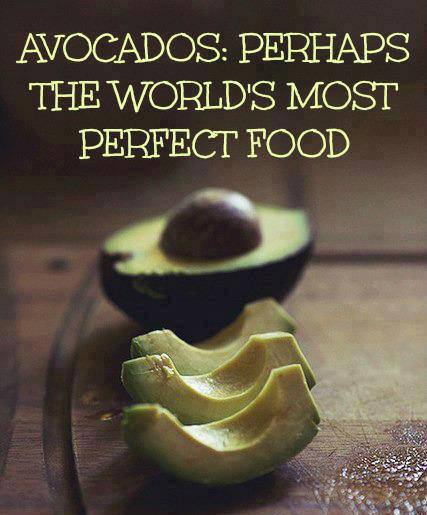 Here are Ten health benefits from eating avocados:


 The age-old saying that drinking milk is one of the keys to good health received a strong rebuttal from Harvard pediatrician David Ludwig who argues that dairy products with added sweeteners are a detriment to one’s health.

 Randolph's World