Feeds:
Posts
Comments

December 10, 2010

Increase your risk
of pancreatic cancer by 87%
by drinking this…

Pancreatic cancer is still one of the hardest cancers to cure. Very few doctors know what it takes to battle this disease. So it’s very important to prevent it. And now it looks like there’s a very easy way to do just that.

A new study out of Singapore found that a common beverage increases your risk of pancreatic cancer by 87%. That’s an astounding increase in risk. It means avoiding this one beverage will go a long way toward avoiding this killer disease.

During just one 10-minute shower, your body can absorb more chlorine than if you drank EIGHT GLASSES of tap water.

The beverage? It’s the same one that causes osteoporosis, heart disease, immune deficiency, and diabetes. It’s sugar-laden soft drinks.

These researchers tracked 60,524 participants over 14 years. They found that those who consumed two or more soft drinks a week increased their risk of pancreatic cancer by 87%. Sugar may be to blame. It increases insulin, which fans the flames of cancer.

However, it’s also possible that those who drink a lot of soft drinks also have other aspects of a deficient diet. Nevertheless, I continue to push for zero tolerance with soft drinks. When I see Coca Cola coming out of a mountain spring, I’ll drink it.

Terri and I recently visited the Santa Cruz amusement park. They had a special for unlimited rides for one price. But to get the special deal, you had to present a Pepsi can at the ticket booth. We did, two in fact, one for each of us. Much to the surprise of the ticket agent, both cans were unopened.

Stay away from soft drinks. They’re great for the taste buds — but terrible for your health.

Yours for better health and medical freedom,

Robert J. Rowen, MD

Cancer Epidemiology, Biomarkers & Prevention Feb 2010.

A good woman who had to endure two tragedies, the death of her teenage son and her politician husband’s infidelity (and this during the time when her cancer had returned). Many describe her as a very classy lady with tremendous resilience. Sadly, she believed too much in Western cancer treatments, including the ‘benefit’ of mammograms. After many rounds of chemo, the cancer not only returned, but had spread to her bones. And what did her doctors recommend? More chemo.

An interesting read HERE.

“I had no alternative but to die or to try to find a cure for myself. I am a scientist –  surely there was a rational explanation for this cruel illness that affects one in 12 women in the UK?

I had suffered the loss of one breast, and undergone radiotherapy. I was now receiving painful chemotherapy, and had been seen by some of the country’s most eminent specialists. But, deep down, I felt certain I was facing death.

I had a loving husband, a beautiful home and two young children to care for.  I desperately wanted to live. Fortunately, this desire drove me to unearth the facts, some of which were known only to a handful of scientists at the time.

Anyone who has come into contact with breast cancer will know that certain risk factors –  such as increasing age, early onset of womanhood, late onset of menopause and a family history of breast cancer –  are completely out of our control. But there are many risk factors, which we can control easily. These ‘controllable’ risk factors readily translate into simple changes that we can all make in our day-to-day lives to help prevent or treat breast cancer. My message is that even advanced breast cancer can be overcome because I have done it.”

Read the rest of the article HERE. And HERE.

And if you have a microwave oven in the house, read THIS.

Expensive, but I have been hearing extremely positive things about this porcupine cure.

Read it HERE …

Since my last post, Michael Douglas has now completed his radiation and chemo treatments. If you recall (see my original post), he said his doctors gave him an 80% chance of recovery. Either Michael Douglas or his doctors (or both) must be dumb. 80% recovery from 4th stage throat cancer through radiation and chemo? Read the latest on his ‘recovery.’ I note that his doctors are advising him to eat more to regain the 30lbs he lost while undergoing treatment. Its very likely the doctors are telling him to stuff himself with meat, meat and more meat. Gain weight, that’s the objective. Read what his friends observed when they saw him after the radiation and chemo. Does it look good to you?

Randolph

Date: Friday Dec. 17, 2010 11:01 AM ET

Michael Douglas plans to attend the Golden Globe awards next month.

The 66-year-old actor – who recently completed radiotherapy and chemotherapy treatment for throat cancer – has been ordered by doctors to “take it easy” but is hopeful he can attend the ceremony, where he is nominated for Best Supporting Actor for his role in ‘Wall Street: Money Never Sleeps’.

His friend Alan Burry revealed: “Michael would like to go to the Golden Globes. He is planning on going.

“Michael can’t yet return to work and he can’t work out physically, he has been ordered to take it easy and get his energy levels up.”

As well as being ordered to rest by doctors, Michael has also been placed on a special diet to help him regain the 30lbs he lost during cancer treatment.

Alan added to RadarOnline.com: “Michael has to eat a lot now to gain back the weight and help him find his strength again. That’s one of the hardest things when you have been through the medication and treatment. He needs to gain weight.

“He looks thin, it’s true, but that is because the chemo eats everything in someone’s body.”

While Michael is said to be doing well in his battle with the disease, some onlookers were shocked by his frail appearance on a recent trip to Disney World in Florida with his wife actress Catherine Zeta Jones, 41, and their two children Dylan, 10 and Carys, seven.

One source said: “He looked frail and sick… he most definitely looked like he needed the wheelchair.”

***************************************************************************************************************

I hope it is not the Hollywood actor in him talking when Michael Douglas says he has a 80% chance of recovery from his 4th stage throat cancer. And this recovery is through radiation and chemo.

I wish him the very best but I do not share the same rosy outlook…

One by one, celebrities with cancer are killed off by the cancer industry and its extremely toxic (even inhumane) treatments of chemotherapy and radiation. The next potential victim is actor Michael Douglas, who recently revealed he is suffering from stage 4 throat cancer. While Douglas has the courage to admit his cancer was likely caused by his “smoking and drinking,” he hasn’t yet found the courage to question the toxicity of conventional cancer treatments. So he’s undergoing several weeks of chemotherapy and radiation “treatments” (if you can call them that).

According to his doctor, Douglas will undergo eight weeks of radiation combined with two rounds of chemotherapy. “Together, it has proven to give a good chance for a cure for the disease,” says Dr Kevin Cullen, director of the University of Maryland Greenebaum Cancer Center. Apparently Dr Cullen is unaware that chemotherapy and radiation never “cure” cancer — they only temporarily shrink tumors while increasing the risk of cancer throughout the body.

One of the most prominent side effects of chemotherapy is, in fact, cancer! The same is true for radiation. These are both cancer-causing interventions in human biology. Instead of boosting immune function, they compromise it. And while they may temporarily shrink cancer tumors, recent research reveals that they don’t eliminate cancer tumor stem cells that can easily re-grow the tumor once the treatments are finished.

That’s why so many cancer tumors grow back after chemotherapy and radiation — the tumor still exists! Merely shrinking it is not an accurate gauge of any real reduction in the risk of the tumor growing back.

The only sure way to stop a cancer tumor from growing back is to change its environment by altering your exercise, diet and intake of anti-cancer foods, superfoods and medicinal herbs. By flooding your body’s cells with anti-cancer nutrients such as vitamin D, selenium, vitamin C and plant-based nutrients, your risk of growing cancer tumors is greatly decreased (by as much as 77% from vitamin D alone, according to the scientific research).

Chemo is the wrong choice

Celebrities who choose chemotherapy and radiation are usually the ones quick to die from their cancers. Patrick Swayze died after receiving chemotherapy for pancreatic cancer; Farrah Fawcett died after chemotherapy for anal cancer; Peter Jennings died after chemotherapy treatments for lung cancer; Tony Snow died after chemotherapy treatments for colon cancer.

But celebrities who choose a healthier, more holistic treatment plan seem to do much better. Perhaps most famously, Suzanne Somers overcame her own breast cancer by turning to natural remedies and a holistic lifestyle.

Sadly, Michael Douglas appears to be following in the footsteps of Patrick Swayze rather than Suzanne Somers. This is sad because Douglas is a phenomenal film actor and we’d all like to have him around for a few more decades so he can continue to contribute to his art. While chemotherapy isn’t guaranteed to take his life, it sets in motion an accelerated biological decline caused by the undeniable toxicity of chemo (not to mention the radiation).

Following these treatments, we are likely to see Michael Douglas age more quickly, suffer impaired cognitive function, show worsening skin health and experience increased fatigue. These are all things that may prevent him from pursuing his work, thereby denying us the joy of seeing him appear in more films.

What cancer docs won’t tell you

While it’s true that radiation and chemotherapy can shrink throat cancer tumors, that alone isn’t enough to restore a person to true health. Following any such cancer treatments, patient should be strongly encouraged to get more vitamin D, consume anti-cancer nutrients and even take nutritional supplements that can boost their immune function.

Sadly, oncologists are currently telling their patients none of these things. In fact, many cancer doctors insist that their patients avoid taking antioxidants, medicinal mushrooms or any source of antioxidants, claiming they might “interfere” with the chemotherapy.

In this way, oncologists doom their patients to pain, suffering and often death. That’s why chemotherapy is often called “physician-assisted suicide.” It’s a way to kill yourself while enriching the drug companies that manufacture chemotherapy agents.

What is chemotherapy?

Chemotherapy agents are derived from highly toxic mustard gas chemicals used as chemical weapons in World War I.

They are so toxic that pharmacists are getting cancer just from handling them.

The No. 1 side effect of chemotherapy is cancer. But it also causes “chemo brain” (the destruction of brain cells) and damages the liver and kidneys.

In choosing chemotherapy and radiation, Michael Douglas has bet his life on the illusion that conventional medicine is telling the truth about cancer. But the industry is actually lying to us all. Cancer is a multi-billion-dollar industry that preys upon the nutritional ignorance of the public while turning human beings into profit machines by promising them “treatments” that only worsen their health.

And sadly, Michael Douglas is the latest victim to be targeted for cancer industry profits.

WHO list reveals flu advisors with financial ties to pharma, vaccine manufacturers

After months of stalling, the World Health Organization (WHO) has finally revealed the names of key pandemic advisors who influenced its decision to declare a phase six pandemic last year — a decision that resulted in a financial windfall for vaccine manufacturers. As you’ll see here, that list includes at least five expert advisors received money from vaccine companies.

Here’s who received money from Big Pharma and then influenced the WHO decision to declare a pandemic:

Arnold Monto is a professor from the United States who has received money from virtually all the major vaccine manufacturers: GSK, Novartis, Roche, Baxter and Sanofi Pasteur. He has specifically been given grant money by Sanofi Pasteur to study influenza vaccines.

Nancy Cox works for the US Centers for Disease Control, which already maintains a pro-vaccine stance while utterly ignoring the importance of vitamin D in halting infectious disease. Nancy took funds from the International Federation of Pharmaceutical Manufacturers and Associations (IFPMA) to conduct work on vaccines.

John Wood works at Britain’s National Institute for Biological Standards and Control (NIBSC). They’ve taken money from Sanofi Pasteur, Novartis and several other companies focused on influenza vaccine research.

Maria Zambon is a professor at the UK Health Protection Agency Centre for Infection. She has received money from Sanofi, Novartis, CSL, Baxter and GSK.

Neil Ferguson is also a professor, and he has accepted money from Roche and GSK Biologicals.

There may be more to this story, too: The financial ties explained here are merely the ones that these people chose to publicly disclose to WHO. There may yet be other ties that currently remain a secret and will have to be dug up by some determined reporter…

What’s the problem with financial ties, anyway?

Why does it matter that WHO advisors took money from vaccine companies? It’s simple: The decision to declare H1N1 swine flu to be a phase 6 pandemic was made by the WHO under advisement from these very people who received money from vaccine companies. And that decision, we now know, resulted in a windfall of profits for the vaccine companies.

Those profits, in turn, were burdened by the taxpayers whose expenditures were largely worthless because a huge portion of those vaccines are now expiring and have to be destroyed. The money was wasted, in other words.

It all has the makings of a grand global con: The WHO enlists advisors with financial ties to the vaccine industry to decide whether a pandemic is under way and then conveniently follows their advice in making a decision that many health experts around the world have been questioning from the start. It all has the appearance of medical corruption, and it looks like WHO decisions are based more on politics than medical science.

It was politically convenient, in other words, to declare a stage six pandemic. And if these WHO advisors have already received money from vaccine manufacturers, it’s certainly within the realm of possibility that they would soon be financially rewarded with yet more payoffs. (You scratch my back and I’ll scratch yours…)

The appearance of corruption

The unfortunate upshot of all this is that even if these WHO advisors are completely innocent, their financial ties still create the appearance of corruption. And that means the WHO is losing credibility that may compromise its integrity when a real pandemic comes along. If the world can’t trust the World Health Organization, in other words, then who should countries look to for real answers on pandemics and infectious disease?

Sadly, even the CDC in the US has now clearly positioned itself as an “anti-nutrition, pro-vaccine” organization, too. Ignoring the huge importance of vitamin D and the support of the human immune system, many CDC experts have also either been on the payrolls of vaccine manufacturers or are looking to join Big Pharma when offered a job. The former head of the CDC, Dr. Julie Gerberding, was recently offered a position as the president of Merck’s vaccine division (http://www.naturalnews.com/027789_D…).

The frustrating fact is that modern medicine has been subverted by Big Pharma. The vaccine industry practically runs the CDC and WHO — or at the very least, it heavily influences decisions by these two organizations. As a result, the so-called “scientific” decisions made by these organizations have very little to do with actual science but everything to do with protecting (and expanding) the profits of vaccine manufacturers.

And when public health policy is decided based on corporate profits, the people will always suffer.

Did you notice that the list of WHO advisors did not include even a single naturopathic physician? Not a single holistic nutritionist? There was nobody on the board that brought a pro-nutrition point of view to the discussions. And you know why nutritionists and naturopaths weren’t invited to join the WHO advisory board? Because the WHO has already pre-decided it doesn’t want to hear those points of view. It has stubbornly decided to entertain only vaccines as the solution to virtually all infectious disease.

And if you only invite vaccine pushers to the table, guess what kind of advice you’re going to get? “Push more vaccines!”

Asking a bunch of vaccine experts whether you should declare a pandemic is sort of like asking your insurance agent whether you need more insurance. Well of course you do!

No wonder the WHO has lost so much credibility. It refuses to look at real solutions that might work for poor nations (such as low-cost vitamin D supplements) while strongly favoring the high-profit operations of the vaccine industry. That’s why the WHO simply can’t be trusted anymore. It has now become a pawn of the pharmaceutical industry that will always make decisions that favor the financial interests of Big Pharma.

See the WHO list of advisors here:
http://www.who.int/ihr/emerg_comm_m…

Sunshine of your Life

What Do You Lack? Probably Vitamin D
By JANE E. BRODY
Published: July 26, 2010

Vitamin D promises to be the most talked-about and written-about supplement of the decade. While studies continue to refine optimal blood levels and recommended dietary amounts, the fact remains that a huge part of the population — from robust newborns to the frail elderly, and many others in between — are deficient in this essential nutrient.

If the findings of existing clinical trials hold up in future research, the potential consequences of this deficiency are likely to go far beyond inadequate bone development and excessive bone loss that can result in falls and fractures. Every tissue in the body, including the brain, heart, muscles and immune system, has receptors for vitamin D, meaning that this nutrient is needed at proper levels for these tissues to function well.

Studies indicate that the effects of a vitamin D deficiency include an elevated risk of developing (and dying from) cancers of the colon, breast and prostate; high blood pressure and cardiovascular disease; osteoarthritis; and immune-system abnormalities that can result in infections and autoimmune disorders like multiple sclerosis, Type 1 diabetes and rheumatoid arthritis.

Most people in the modern world have lifestyles that prevent them from acquiring the levels of vitamin D that evolution intended us to have. The sun’s ultraviolet-B rays absorbed through the skin are the body’s main source of this nutrient. Early humans evolved near the equator, where sun exposure is intense year round, and minimally clothed people spent most of the day outdoors.

“As a species, we do not get as much sun exposure as we used to, and dietary sources of vitamin D are minimal,” Dr. Edward Giovannucci, nutrition researcher at the Harvard School of Public Health, wrote in The Archives of Internal Medicine. Previtamin D forms in sun-exposed skin, and 10 to 15 percent of the previtamin is immediately converted to vitamin D, the form found in supplements. Vitamin D, in turn, is changed in the liver to 25-hydroxyvitamin D, the main circulating form. Finally, the kidneys convert 25-hydroxyvitamin D into the nutrient’s biologically active form, 1,25-dihydroxyvitamin D, also known as vitamin D hormone.

A person’s vitamin D level is measured in the blood as 25-hydroxyvitamin D, considered the best indicator of sufficiency. A recent study showed that maximum bone density is achieved when the blood serum level of 25-hydroxyvitamin D reaches 40 nanograms per milliliter or more.

“Throughout most of human evolution,” Dr. Giovannucci wrote, “when the vitamin D system was developing, the ‘natural’ level of 25-hydroxyvitamin D was probably around 50 nanograms per milliliter or higher. In modern societies, few people attain such high levels.”

A Common Deficiency

Although more foods today are supplemented with vitamin D, experts say it is rarely possible to consume adequate amounts through foods. The main dietary sources are wild-caught oily fish (salmon, mackerel, bluefish, and canned tuna) and fortified milk and baby formula, cereal and orange juice.

People in colder regions form their year’s supply of natural vitamin D in summer, when ultraviolet-B rays are most direct. But the less sun exposure, the darker a person’s skin and the more sunscreen used, the less previtamin D is formed and the lower the serum levels of the vitamin. People who are sun-phobic, babies who are exclusively breast-fed, the elderly and those living in nursing homes are particularly at risk of a serious vitamin D deficiency.

Dr. Michael Holick of Boston University, a leading expert on vitamin D and author of “The Vitamin D Solution” (Hudson Street Press, 2010), said in an interview, “We want everyone to be above 30 nanograms per milliliter, but currently in the United States, Caucasians average 18 to 22 nanograms and African-Americans average 13 to 15 nanograms.” African-American women are 10 times as likely to have levels at or below 15 nanograms as white women, the third National Health and Nutrition Examination Survey found.

Such low levels could account for the high incidence of several chronic diseases in this country, Dr. Holick maintains. For example, he said, in the Northeast, where sun exposure is reduced and vitamin D levels consequently are lower, cancer rates are higher than in the South. Likewise, rates of high blood pressure, heart disease, and prostate cancer are higher among dark-skinned Americans than among whites.

The rising incidence of Type 1 diabetes may be due, in part, to the current practice of protecting the young from sun exposure. When newborn infants in Finland were given 2,000 international units a day, Type 1 diabetes fell by 88 percent, Dr. Holick said.

The current recommended intake of vitamin D, established by the Institute of Medicine, is 200 I.U. a day from birth to age 50 (including pregnant women); 400 for adults aged 50 to 70; and 600 for those older than 70. While a revision upward of these amounts is in the works, most experts expect it will err on the low side. Dr. Holick, among others, recommends a daily supplement of 1,000 to 2,000 units for all sun-deprived individuals, pregnant and lactating women, and adults older than 50. The American Academy of Pediatrics recommends that breast-fed infants receive a daily supplement of 400 units until they are weaned and consuming a quart or more each day of fortified milk or formula.

Given appropriate sun exposure in summer, it is possible to meet the body’s yearlong need for vitamin D. But so many factors influence the rate of vitamin D formation in skin that it is difficult to establish a universal public health recommendation. Asked for a general recommendation, Dr. Holick suggests going outside in summer unprotected by sunscreen (except for the face, which should always be protected) wearing minimal clothing from 10 a.m. to 3 p.m. two or three times a week for 5 to 10 minutes.

Slathering skin with sunscreen with an SPF of 30 will reduce exposure to ultraviolet-B rays by 95 to 98 percent. But if you make enough vitamin D in your skin in summer, it can meet the body’s needs for the rest of the year, Dr. Holick said.

Can You Get Too Much?

If acquired naturally through skin, the body’s supply of vitamin D has a built-in cutoff. When enough is made, further exposure to sunlight will destroy any excess. Not so when the source is an ingested supplement, which goes directly to the liver.

Symptoms of vitamin D toxicity include nausea, vomiting, poor appetite, constipation, weakness and weight loss, as well as dangerous amounts of calcium that can result in kidney stones, confusion and abnormal heart rhythms.

But both Dr. Giovannucci and Dr. Holick say it is very hard to reach such toxic levels. Healthy adults have taken 10,000 I.U. a day for six months or longer with no adverse effects. People with a serious vitamin D deficiency are often prescribed weekly doses of 50,000 units until the problem is corrected. To minimize the risk of any long-term toxicity, these experts recommend that adults take a daily supplement of 1,000 to 2,000 units.

For you, there’ll be no more crying,
For you, the sun will be shining,
And I feel that when I’m with you,
It’s alright, I know it’s right.

To you, I’ll give the world
To you, I’ll never be cold
‘Cause I feel that when I’m with you,
It’s alright, I know it’s right.

And the songbirds are singing,
Like they know the score,
And I love you, I love you, I love you,
Like never before.

And I wish you all the love in the world,
But most of all, I wish it from myself.

And the songbirds keep singing,
Like they know the score,
And I love you, I love you, I love you,
Like never before, like never before.

July 9, 2010 marks a year since Rokiah’s passing.

While it may be convenient to say that words cannot express the feelings, this will not be the case this time. One year is enough time to make an unemotional review of the loss that occurred at 11.20pm, July 9, 2009 in a quiet ward at a specialist hospital in Johor Bahru.

The surgeon who first operated on Rokiah on September 5, 2008, to remove the primary tumor did not do a good job. Hardly six days after this first major operation, the wound started to discharge liquids. This only meant one thing – the wound is not healing, and necessitated a second major operation on September 20. That’s two major operations only two weeks apart. Can any person stricken with 4th stage cancer bounce back from this?

This particular doctor, operating (no pun intended) at Sunway Medical, came highly recommended. As far as colon cancer was concerned, he was considered one of the best in the country. I had suspected for a long time that his skills were not quite up to the mark after the first operation, and now, given enough time to ponder the possibilities, I come to the conclusion that this surgeon botched the operation. Cases of the wound not healing and necessitating a second operation so soon after the first in colon surgeries such as this one is rare, and can even be considered unusual.

Add to this was the fact that in the months to follow, a swelling developed in the same area where the original tumor was, a swelling that keep recurring until Rokiah’s death. It was this swelling, when it broke and pus/fluids/blood discharged, that sent Rokiah in an ambulance to the hospital for the very last time.

I had the opportunity to speak to the Medical Director/Surgeon in the Johor hospital during her admission there and he mentioned something that made sense of what I had been thinking all along. This kind, compassionate head of the hospital said that the recurring swelling (it would form, break open, then form again) is likely a result of some bacteria left in the colon area that was not completely cleaned up during the first operation. Now wouldn’t this be a case of a poorly handled surgery by a not so competent surgeon?

Lesson learnt: Always seek a second, even third opinion. When diagnosing a disease or when choosing a doctor.

I was there throughout Rokiah’s sickness, to witness the suffering and the decline in her health over 12 months. And because of this, a fear of cancer now exists in my mind. Sometimes, when I get a prolonged cough, I half expect to see some blood the next time I cough. And every time I get a discomfort or pain somewhere in my body, I will recall, painfully, what it must have been like to be ill for so long. To have to endure this evil sickness with the thought that the battle against this deadly foe may be a losing one cannot be easy for anyone. I also realize that no matter how much we empathize, we will never know what its really like to suffer from cancer.

If there is a blessing from this, it is the awareness of how important good health is. Health being wealth has new meaning for me. Just being able to sit down and eat a meal is a blessing from God as there are many who cannot eat, let alone enjoy a meal. And good health comes from eating right. I have completely changed my diet, while still staying on the side of sanity, of course. No, I am not a vegan, and no, I do not believe in eating only organic food. But anything that now goes into my mouth has to mentally pass a ‘healthy food check.’ Added to this is a little exercise, exposure to sunlight, one or more ayurvedic practices and avoidance of quite a few goodies. There will be no turning back for me and I urge you to do the same.

Lesson learnt: Appreciate the key role food plays in helping the immune system maintain good health.

Perhaps the most telling lesson for me as far as cancer is concerned is that conventional cancer treatment does not help a cancer patient, especially a patient with advanced cancer. More often than not, it actually speeds up the demise of the patient, and along the way, inflicts more damage and suffering on the patient.

I have also learnt that doctors dealing with cancer see things from only one side, the side that can only offer radiation and chemotherapy as ‘cures.’ They are simply ignorant on other ways and methods to treat the disease. And that the majority of doctors know next to nothing about nutrition and healthy eating. You shouldn’t be surprised actually, because they do not teach doctors nutrition in the majority of medical schools.

I would go as far as to say that the more I read about cancer, the less respect I have for doctors, surgeons and most of all, oncologists. When will they ever see the light?

Lesson learnt: There are other ways to treat cancer. Doctors are not that smart. You may be smarter.

With email being so common today, you may have received one of those emails that tell you to appreciate what you have now, or to smell the roses, or to express your feelings to those close to you before its too late. It is true and we should take heed. Rokiah showed great strength, courage and grace during her time of suffering. I never once heard her complain about her cancer. And she always had a smile on her face, in the face of adversity. She will always be loved, and missed.

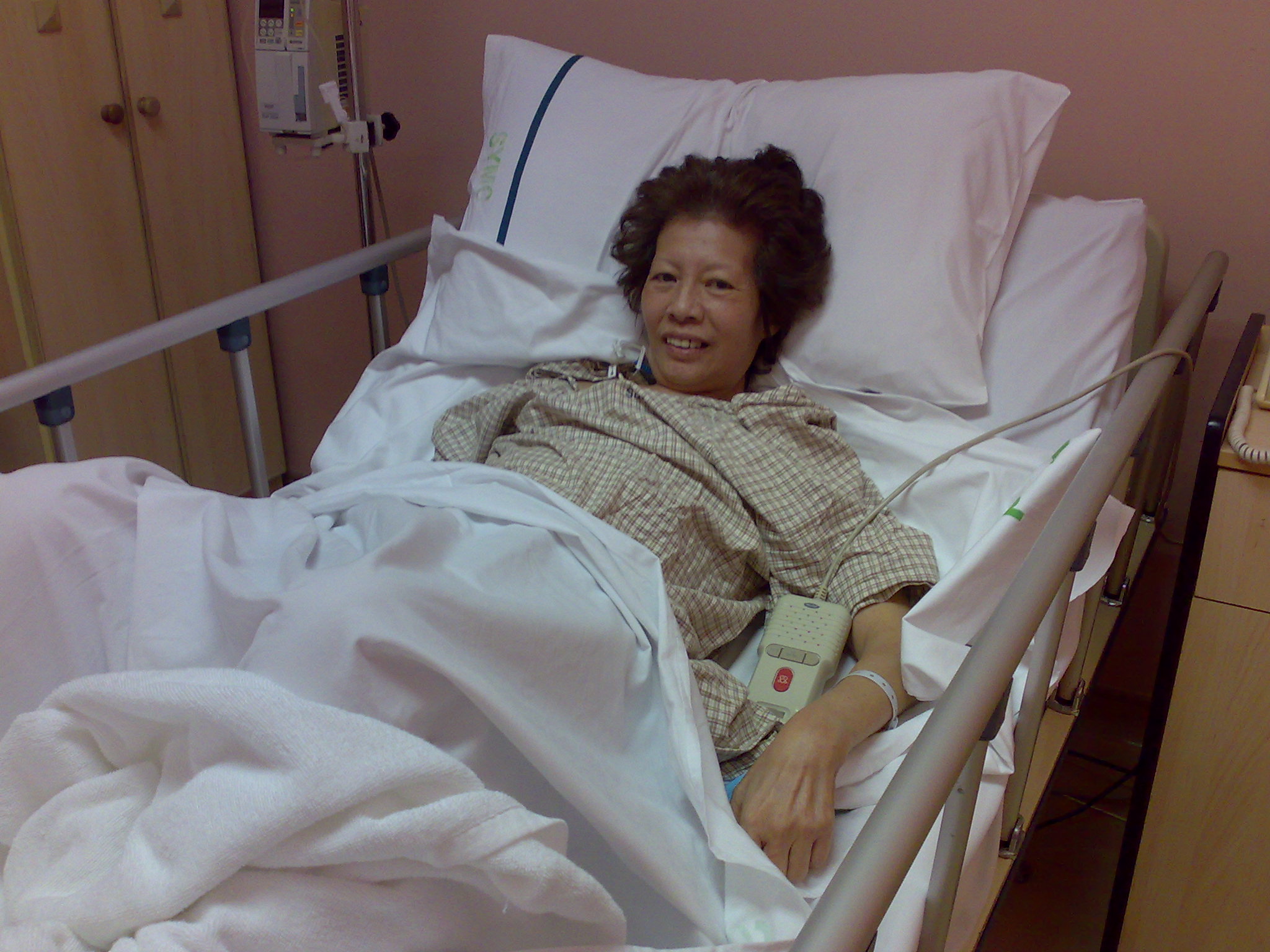
After the first operation, and a very close brush with death

Courage is grace under pressure – Ernest Hemingway

In Food, Inc., award-winning filmmaker Robert Kenner lifts the veil on the US food industry, exposing the highly mechanized underbelly that has been hidden from the American consumer with the consent of the US government’s regulatory agencies, USDA and FDA. The American nation’s food supply is now controlled by a handful of corporations that often put profit ahead of consumer health, the livelihood of the American farmer, the safety of workers and the environment. They now produce bigger-breasted chickens, the perfect pork chop, herbicide-resistant soybean seeds, even tomatoes that won’t go bad, but we also have new strains of E. coli—the harmful bacteria that causes illness for an estimated 73,000 Americans annually. The US is riddled with widespread obesity, particularly among children, and an epidemic level of diabetes among adults.

Soon, it will be the same in Malaysia, if not already so…..