What Did This 10-Year, 13-Nation Study Discover About Brain Cancer and Cell Phones?
Posted in June 2010 | Tagged brain tumor, danger of cellphones | Leave a Comment »
So drinking a few glasses of red wine isn’t going to help, as far as getting resveratrol is concerned.
And do you notice that people who live to a very old age eat very little? The lessons have been there all this while – we just fail to see it. Or refuse to believe it ………. Randolph
Resveratrol — Remarkable Anti-aging Supplement
It’s been several years since I talked about resveratrol. It’s this wonderful substance in red wine. You’ve probably read about it and maybe felt all you had to do to take advantage of it is serve yourself a nice glass of Merlot every night. Well, unfortunately, the “French paradox” to the contrary notwithstanding, it is impossible to drink enough red wine to get enough of this incredibly useful substance. You’d need about 500 bottles of wine and you’d fry your liver with the alcohol before you got enough of the resveratrol for the day.
My friend, Nick Temple, gave me a great article this week from the August, 2009 issue of the Life Extension Foundation’s magazine. I respect these folks. They have championed the alternative healing arts, particularly as they pertain to anti-aging, for many years.
The article Nick gave me is called “Extending Life and Fighting Disease with Resveratrol” by Julius Goepp, M.D. I’ll quote you a couple of Dr. Goepp’s opening paragraphs to give you an idea of the exciting nature of the information on this amazing supplement:
“At the forefront of the cutting-edge investigations into resveratrol and health and longevity are Drs. Christoph Westphal and David Sinclair.
Christoph Westphal, MD, PhD, has been referred to by Fortune Magazine as ‘dreamer-in-chief’ of biotech startup company Sirtris Pharmaceuticals based near Harvard University in Cambridge, MA. The moniker is well-earned; Westphal’s dreams appear to include the application of some very exciting science toward the goal of life extension by utilizing resveratrol.
Westphal’s work builds on (and incorporates) that of Harvard scientist David Sinclair, PhD, whose research group is pursuing connections buried deep in the cells of every animal on the planet, that of caloric restriction and longevity. Thanks to the work of Westphal and Sinclair, it is becoming clear that resveratrol mimics the life span-prolonging effects of caloric restriction, even in animals fed normal to high-fat diets.”
I have been aware of Sinclair’s work as a result of reading some of the Life Extension articles on it in the last few years. It has been proven that any animal, including humans, can extend their lifespan by about 40% simply by cutting the intake of daily calories by about 40%. This has been shown to be effective regardless of when it was started during the lifespan of the critter (or human being). Isn’t that great? Just cut what you eat almost in half for the rest of your life and you’ll live a long time. Hmmmmm. I don’t see that this promise has attracted that many of us to adopt that type of restriction on our lifestyle. On the contrary, in spite of knowing this, we still “eat on” and usually become overweight, obese and in ill health.
But what if the same life-extending effect were possible without cutting the calories? Would you be interested? I sure was. To understand this phenomenal property of resveratrol, you need to get familiar with something called “sirtuins.” Here’s how Dr. Goepp describes them:
“The specific molecules…turn out to be members of a protein family called the sirtuins (for silent information regulators), which are activated by caloric restriction. Like a combination of cellular police, fire and ambulance services, sirtuins exert myriad effects aimed at preserving intra-cellular civilization–they stabilize chromosomes and DNA molecules, preventing breaks and damage that can lead to cancer; they promote DNA repair, and they regulate genetic functions that in turn control every activity in the living cell. Most remarkably, decreased sirtuin activity seems to be intimately connected with the cell, tissue and organ changes that typically occur with aging and lead to many of the diseases we label ‘chronic age-related conditions’ such as cancer, diabetes, cardiovascular diseases, and neurodegenerative disorders such as Alzheimer’s disease.”
At the National Institute on Aging, Dr. Sinclair’s research team experimented with giving resveratrol to mice just as they had done with their caloric restriction studies. Remarkably, they found that the same effects appeared in the resveratrol mice. Elderly mice fed resveratrol along with a normal diet showed a dramatic reduction in signs of aging. The changes in the gene expression were exactly the same as those observed with caloric restriction. What were the changes:
1. Decreased protein loss in urine.
2. Decreased inflammation.
3. Increased elasticity in the aorta.
4. Beneficial changes in blood vessel lning cells.
5. Greater motor coordination.
6. Reduced cataract formation.
7. Preserved bone mineral density.
As Dr. Goepp says: “This study, begun when the mice were at mid-life, did not show any increases in longevity–but translated into human terms, these mice would have enjoyed dramatic improvements in the quality of their lives.”
Then pathologists at Harvard, working with Dr. Sinclair, found that, in fact, length of life actually did result when they fed the mice on a high-calorie diet the resveratrol. That was the only change. The resveratrol mice experienced changes associated with an increase in life span. These included:
1. Increased insulin sensitivity.
2. Increased numbers of mitochondria in cells.
3. Improved motor function.
In fact, the researchers discovered that the resveratrol reversed the effects of the high-calorie diet in 144 out of 153 biochemical pathways!
Does that get your attention? It should. But how about other studies. There have been many all over the world. He recounts studies in Korea, Canada, China, Turkey, Greece, Italy, Hong Kong, Spain, India and the U.S. It seems that conventional cardiologists are agreeing, literally for the first time, that atherosclerosis (the most common form of heart disease) is reversible using resveratrol. It has been found to work in both prevention and treatment of cancer.
If you want to start taking resveratrol regularly, as I am, you’ll find it on many websites. The most effective form is called “trans-resveratrol.” You will find it and many other sources by just doing a Google search for “trans-resveratrol.” I’ll be interested in your feedback once you try it.
Bill Henderson Author, “Cure Your Cancer” and “Cancer-Free”Posted in June 2010 | Tagged eat less, live longer, resveratrol, why you should eat less | Leave a Comment »
“You’ve surely heard that broccoli is one of nature’s most potent cancer-preventing foods. Several studies attest to this fact.One of the reasons that broccoli seems to work is related to a compound called sulforaphane. It selectively targets cancer stem cells, and by doing so, it effectively prevents the cancer from spreading and/or recurring….
broccoli sprouts, contain the highest amounts of isothiocyanates…”
From Kelley Eidem, author of The Doctor Who Cures Cancer
“Let’s talk about sulfurophane. First, why can’t they use easy words like “dog” or “cat” for those healthy compounds! Let’s call ’em “sulfy.” Are you with me…sulfy.Sulfy helps 200 of your genes, including the ones that make you younger.
Sulfy allows YOU to make your own antioxidants, too. A big secret is that the antioxidants your body makes are far more powerful than the ones you eat!
In other words, YOU are more powerful than a bowl of blueberries! But that’s only true if you give yourself the raw ingredients. Broccoli: yum! LOL!
If you like broccoli, then you are definitely a step ahead.
I don’t hate broccoli, but I don’t eat enough of it according to Dr. Mercola, who wants you and me to eat 10 spears of it a week. Ten spears?!?
As noted above, Mercola also points out that it’s broccoli sprouts that have the highest concentration of the real secret ingredient: isothiocyanates, also known as “issy.” haha
I don’t recall the last time I ate a broccoli sprout, do you? hehe But if you do, that is fantastic!”
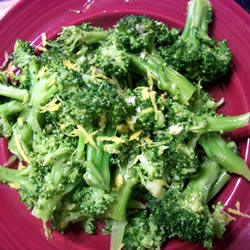
Garlic Broccoli Spears – Recipe from Shirley Glabb
Ingredients
- 1 pound fresh broccoli, cut into spears
- 2 tablespoons olive or vegetable oil
- 1 tablespoon lemon juice
- 1 garlic clove, minced
- 1/4 teaspoon salt
- 1/8 teaspoon pepper
Place the broccoli in a saucepan with a small amount of water; cover and cook until crisp-tender. Meanwhile, combine remaining ingredients. Drain broccoli and place in a serving dish; add lemon mixture and toss to coat. Serve immediately.
Posted in May 2010 | Tagged broccoli, recipe | Leave a Comment »
BP Gulf catastrophe typifies corporate behavior in America
The Gulf of Mexico oil catastrophe, now in its 35th day, has struck land, coating tourist beaches, marshes and shorelines with a greasy black filth that metaphorically represents the corporate greed that now dominates the U.S. economy. We are all awash in the dark slime of corporations gone bad, and now we’re paying the price for allowing these companies to dominate our media, our government and our entire economy.
You might think government regulators could have prevented all this, but that’s hardly the case. This disaster isn’t merely about a government regulation failure; it’s about what happens when you let corporations rule Washington.
Reporters threatened with arrest by U.S. Coast Guard under orders from BP
British Petroleum has been steamrolling both the federal government and the press over this oil catastrophe in the Gulf. For starters, the U.S. Coast Guard is now threatening to arrest journalists who try to cover the story by invoking “BP rules” that forbid journalists from conducting investigative journalism. (http://www.cbsnews.com/stories/2010…)
As reported by CBS News: “When CBS News tried to reach the beach, covered in oil, a boat of BP contractors with two Coast Guard officers on board told us to turn around under threat of arrest.”
In other words, the U.S. Coast Guard is now protecting the financial interests of corporations by trying to censor a story the public needs to see.
At the same time, BP thumbed its nose at the EPA and flatly refused to use less-toxic chemical dispersants in its cleanup efforts. So yesterday, the White House ordered BP to cut its use of chemical dispersants by half. The chemical in question is called Corexit, and so far BP has dumped 650,000 gallons of the toxic chemical in the Gulf of Mexico.
And yet, as the Guardian reports, “Scientists told congressional hearings last week that Corexit was more toxic and less effective than other dispersants on the market. Conservationists fear the chemical could further jeopardize already depleted stocks of fish such as Atlantic bluefin tuna or poison endangered species of turtle.” (http://www.guardian.co.uk/environme…)
Powerful corporations write their own rules
BP, of course, can simply ignore the order to ease off its use of chemical dispersants, just like it ignored rules and regulations about drilling for oil in the ocean in the first place. And that’s the problem here: When corporations are allowed to run the show, they will inevitably take shortcuts that compromise the health of their customers or the environment.
The same thing is true with Big Pharma, which basically runs the FDA, FTC and CDC. What BP is doing to the Gulf of Mexico, Big Pharma is doing to the health of the world population. And yet because it is so incredibly profitable to poison people with dangerous prescription medications, the pharmaceutical industry has the financial influence to dominate the actions of government regulators.
Similarly, the meat and dairy industries basically run the USDA. That’s why healthy raw milk is being outlawed while pasteurized, processed dead milk is heavily pushed by the USDA (and the FDA).
Time and time again, powerful corporations corrupt the system and turn it to their own advantage: Military contractors dictate foreign policy. Monsanto dictates agriculture policy. Wall Street dictates banking regulations. And British Petroleum writes its own rules when it comes to offshore drilling.
It’s not even a question of government regulators having too little power, either… regulators have plenty of power. It’s just that they are using it against the People rather than to protect the people. They are purposely avoiding holding corporations responsible for their actions that are destroying our health, our economy and our environment.
A crime against our planet
For example, if you or I dumped 650,000 gallons of a toxic chemical in the ocean, we’d be arrested and brought up on criminal charges that would probably include “terrorism” charges under the Patriot Act. But when BP executives do exactly the same thing, nothing happens to them. No arrests. No criminal charges. No consequences.
Heck, you know as well as I do that BP will get off with a slap on the wrist when this is all over. Every major corporation that commits fraud (Big Pharma), steals from the People (Goldman Sachs) or causes an environmental catastrophe (BP) gets off virtually scot-free.
Well why is that? Why can corporations commit the most heinous crimes imaginable and yet never be held accountable? Big Pharma has engaged in so much price fixing fraud, clinical trial fraud and fraudulent marketing that it would make your head spin. Yet the U.S. government continues to do business with Big Pharma, buying up their dangerous drugs at monopoly prices, even though these companies are essentially corporate felons.
Business as usual in the corporate world
The sad truth is that this disaster in the Gulf of Mexico isn’t an aberration. It’s just business as usual in the corporatocracy known as the United States of America, Inc. The corporations run this country, and they do whatever they want, regardless of how many people are killed, how many laws are broken or how many miles of coastline are utterly destroyed by chemical contamination. They operate with utter disregard for anything resembling ethics or honesty.
Corporate greed knows no limits. If corporate executives could profit another billion dollars by destroying the entire Gulf of Mexico, do you have any doubt they would pursue that course of action? Your life has no value to them. Marine life has no value to them. The health of the world’s oceans have no value to them. They only value one thing: The bottom line profit they can produce at any cost.
British Petroleum = Big Pharma = Big Food = Big Agriculture = the Military Industrial Complex.
It’s all the same, folks. Do not be surprised that these criminal corporate operators are destroying our planet. They’ve been doing it for generations, and they absolutely will not stop unless We the People make them stop through force (by having these people arrested and imprisoned, for example).
If you really want to clean up the planet, we should stop tossing chemical dispersants into the Gulf and just start tossing greed-minded corporate executives into the ocean and see how far they can swim when they’re coated with oil.
That would be planetary justice, my friends, and it would send a powerful message that corporate executives who cause harm to the world around them may end up swimming in the very same cesspools of greed they themselves created.
Posted in May 2010 | Tagged big pharma, BP oil spill, sins against mankind | 1 Comment »
Breast cancer breakthrough: broccoli component zaps cells that fuel tumor growth
University of Michigan (U-M) Comprehensive Cancer Center scientists say they’ve found a compound that could help prevent and potentially treat breast cancer. It’s not a drug or a new radiation treatment but a natural component of broccoli and broccoli sprouts. And it has the remarkable ability to target cancer stem cells — the specific cells responsible for fueling the growth of cancerous breast tumors.
The researchers tested the broccoli compound, known as sulforaphane, in animal studies as well as in breast cancer cell cultures in the lab. Their findings, which were recently published in the journal Clinical Cancer Research, showed sulforaphane not only targeted and killed cancer stem cells, but it also prevented any new malignancies from growing.
What makes this such an extraordinary breakthrough? Current chemotherapies don’t do anything to stop cancer stem cells. That’s why cancer can recur and spread after chemotherapy. So many researchers have long believed that to control cancer, you have to find a way to eliminate cancer stem cells — and now it appears sulforaphane does exactly that.
“Sulforaphane has been studied previously for its effects on cancer, but this study shows that its benefit is in inhibiting the breast cancer stem cells. This new insight suggests the potential of sulforaphane or broccoli extract to prevent or treat cancer by targeting the critical cancer stem cells,” study author Duxin Sun, Ph.D., associate professor of pharmaceutical sciences at the U-M College of Pharmacy and a researcher with the U-M Comprehensive Cancer Center, said in a statement to the media. (Sure, what’s new?? … Randolph)
For their study, the U-M researchers first worked with mice with breast cancer. They used several well-documented methods to assess the number of cancer stem cells in the animals’ breast tumors. Then the research team injected varying concentrations of sulforaphane extracted from broccoli into the mice.
The results? There was a dramatic decrease in the number of cancer stem cells after treatment with sulforaphane, but there was little effect on the normal cells. What’s more, the cancer cells from mice treated with sulforaphane were unable to generate new tumors.
Next, the scientists tested sulforaphane on human breast cancer cell cultures in the lab. Once again, they found the numbers of cancer stem cells plummeted after exposure to the broccoli compound.
“This research suggests a potential new treatment that could be combined with other compounds to target breast cancer stem cells. Developing treatments that effectively target the cancer stem cell population is essential for improving outcomes,” study co-author Max S. Wicha, M.D., Distinguished Professor of Oncology and director of the U-M Comprehensive Cancer Center, said in the press statement.
The scientists pointed out that concentrations of sulforaphane used in the study were higher than what can be normally achieved by eating broccoli or broccoli sprouts. However, previous research suggests the body can absorb high enough concentrations of sulforaphane from broccoli extract to impact cancer. Currently, the U-M research team is working to develop a method to extract and preserve sulforaphane. They are also planning a future clinical trial to test sulforaphane both as a prevention and treatment for breast cancer.
(Yes, find a way to produce a synthetic version, patent it, and make millions … Randolph)
NaturalNews has previously reported on additional health benefits of broccoli. For example, broccoli sprouts have been found to potentially play a protective role in the prevention of gastric cancer by reducing colonization of the cancer and ulcer-linked bacteria Helicobacter pylori (H. pylori) in the body.
Research by University of California at Los Angeles (UCLA) scientists also found that sulforaphane in broccoli appears to protect against respiratory inflammation that causes asthma, allergic rhinitis, chronic obstructive pulmonary disease (COPD) and other conditions that make it hard to breathe.
For more information:
http://www.ncbi.nlm.nih.gov/pubmed/…
Posted in Healing the Sick, May 2010 | Tagged breast cancer, brocolli, diet | Leave a Comment »
Heavy metal veteran Ronnie James Dio dies
May 17, 2010

Dio sings at the Aladdin Theatre for the Performing Arts in Las Vegas in this May 31, 2002 file photo. — Reuters pic
LOS ANGELES, May 17 — Ronnie James Dio, the pint-sized heavy metal singer who replaced Ozzy Osbourne in Black Sabbath, died yesterday, five months after being diagnosed with stomach cancer, his wife said. He was 67.
Randolph’s Comments
What struck me as odd was this, from the same report:
“Dio disclosed last November that he had been diagnosed with the early stages of stomach cancer, and would immediately start treatment. Two months ago, he reported that the main tumour had shrunk considerably, and visits to his cancer clinic in Houston had been reduced.”
So if it was indeed early stage cancer, and that the tumor had shrunk (after chemo), why did he die after only 5 months? The answer is simple – the chemo did not work. And conventional medicine’s obsession with tumors has once again proven that the whole cut, burn and kill approach (surgery, radiation, chemo) is quite ineffective in many cases.
Posted in May 2010 | Tagged chemo does not work, ronnie james dio | Leave a Comment »
I was sent a sms this morning saying that a friend, CK, had succumbed to his cancer.
It was in early September 2008 in Sunway Medical hospital (I mention this hospital with some anger) when I met CK’s wife, Irene, sitting by the elevator outside the ward. Rokiah was recovering from the operation to remove the tumor in her colon and I was taking a break from bedside duty and was sitting on the couch near the elevator when I noticed Irene. I asked her why she looked so distraught. She told me that her husband, CK, has been diagnosed with cancer.
CK had lasted longer than most with pancreatic cancer, and I know this to be mostly due to his tremendous fighting spirit. One could sense his will to fight with everything he could muster if you read his writings in his blog.
CK tried an alternative cancer treatment initially, but gave it up for what he called “evidence-based medicine”. Someone like me will always wonder if he could have done better if he didn’t continue with evidence-based medicine’s toxic treatments. And for those who believe that religion alone can cure cancer, they too will be wondering if CK would have lasted even longer had he placed his life in the hands of his God. CK talks about both in his blog.
I knew something was wrong when he stopped writing in mid-January this year. That blog entry on January 13th, “A Blessed Life” would be his last. I wish you peace and a blessed life in your new world, CK.
Also read our common friend, Cheah’s goodbye to CK here.
Posted in May 2010 | Tagged CK, evidence-based medicine, sunway medical, Taiping Coffee | 2 Comments »
When an individual, trained as a doctor, is diagnosed as having cancer, new meaning is given to life. Dreams, plans and priorities change overnight. Suddenly, the greatest wish becomes as simple as wanting to feel well, be able to eat, and be free of pain. Finding the perfect partner in life, a beautiful home and lovely children are things that are now all placed on the back burner.
It is a sad fact in life that when things are fine, people have no time to appreciate how lucky they are. Only when things go wrong do they start looking for peace of mind, wellness, and God. I am always surprised that so many people choose to go on a path of reckless living, and eating (all sorts of rubbish) like there is no tomorrow. They will learn eventually, sometimes too late.
The UK-trained doctor I was talking about is Dr. Mas Afzal, who I would like to refer to as a friend.
Please visit his inspiring blog: http://www.masafzal.blogspot.com/
Posted in April 2010, Healing the Sick | Tagged appreciate life, dr mas afzal | Leave a Comment »
|
Posted in April 2010, Healing the Sick | Tagged early signs of cancer | 39 Comments »
Yesterday, in the early hours of April 12, 2010, Long Thin Kay went to meet his maker. Long had first written to me through this website on February 2 this year. He had asked for my opinion on B17. I replied and talked to him on the phone, and met him a few weeks later. He was diagnosed with pancreatic cancer in October 2009 and as usual, chemotherapy was recommended, and taken. His health started to deteriorate thereafter.
Although I did not know Long very well, I followed his ‘progress’ with interest and concern. I was concerned that the chemo had done great damage to his immune system and that there may not be enough time for alternative treatments to reverse this damage.
I also had the opportunity to meet Long’s young daughter, Haze. I find her to be intelligent, talented, and with the potential to succeed in her chosen field. Although she did not have the best of relationships with her father, she is still his only daughter, and with his passing, is now without parents. She has written ‘The Last Chapter’ on her blog, describing the last months of her dad’s life, her sometimes contentious relationship with him, the joys, and most of all, the sorrows. It is beautifully written and I will leave it to Haze to tell her story…..Rest in Peace, Long.
Posted in April 2010 | Tagged Haze, Long Thin Kay | Leave a Comment »
Pages
- Follow Randolph's World on WordPress.com
My Facebook
Facebook: Randolph Training
Twitter
Tweets by honeykauArchives
- September 2026
- June 2026
- February 2026
- January 2026
- December 2025
- September 2025
- August 2025
- July 2025
- June 2025
- May 2025
- April 2025
- March 2025
- February 2025
- April 2024
- June 2023
- December 2022
- July 2022
- June 2022
- February 2022
- January 2022
- November 2021
- October 2021
- September 2021
- August 2021
- January 2021
- September 2020
- August 2020
- May 2020
- August 2019
- June 2019
- May 2018
- April 2018
- March 2018
- November 2017
- October 2017
- June 2017
- February 2017
- January 2017
- November 2016
- August 2016
- July 2016
- May 2016
- March 2016
- January 2016
- October 2015
- September 2015
- August 2015
- July 2015
- June 2015
- May 2015
- April 2015
- March 2015
- February 2015
- January 2015
- December 2014
- November 2014
- October 2014
- September 2014
- August 2014
- July 2014
- June 2014
- May 2014
- April 2014
- March 2014
- February 2014
- January 2014
- December 2013
- November 2013
- October 2013
- September 2013
- August 2013
- July 2013
- June 2013
- May 2013
- April 2013
- March 2013
- February 2013
- January 2013
- December 2012
- November 2012
- October 2012
- September 2012
- August 2012
- July 2012
- June 2012
- May 2012
- April 2012
- March 2012
- February 2012
- January 2012
- December 2011
- November 2011
- October 2011
- September 2011
- August 2011
- July 2011
- June 2011
- May 2011
- April 2011
- March 2011
- January 2011
- December 2010
- November 2010
- September 2010
- August 2010
- July 2010
- June 2010
- May 2010
- April 2010
- March 2010
- February 2010
- January 2010
- December 2009
- October 2009
- September 2009
- July 2009
- June 2009
- May 2009
- March 2009
- February 2009
- January 2009
- December 2008
- November 2008
- October 2008
- September 2008
- July 2008
- June 2008
- May 2008
Categories


 Randolph's World